A Guide to Italian Pasta Shapes
Italian pasta comes in many shapes, and the shape is often chosen for a specific reason.
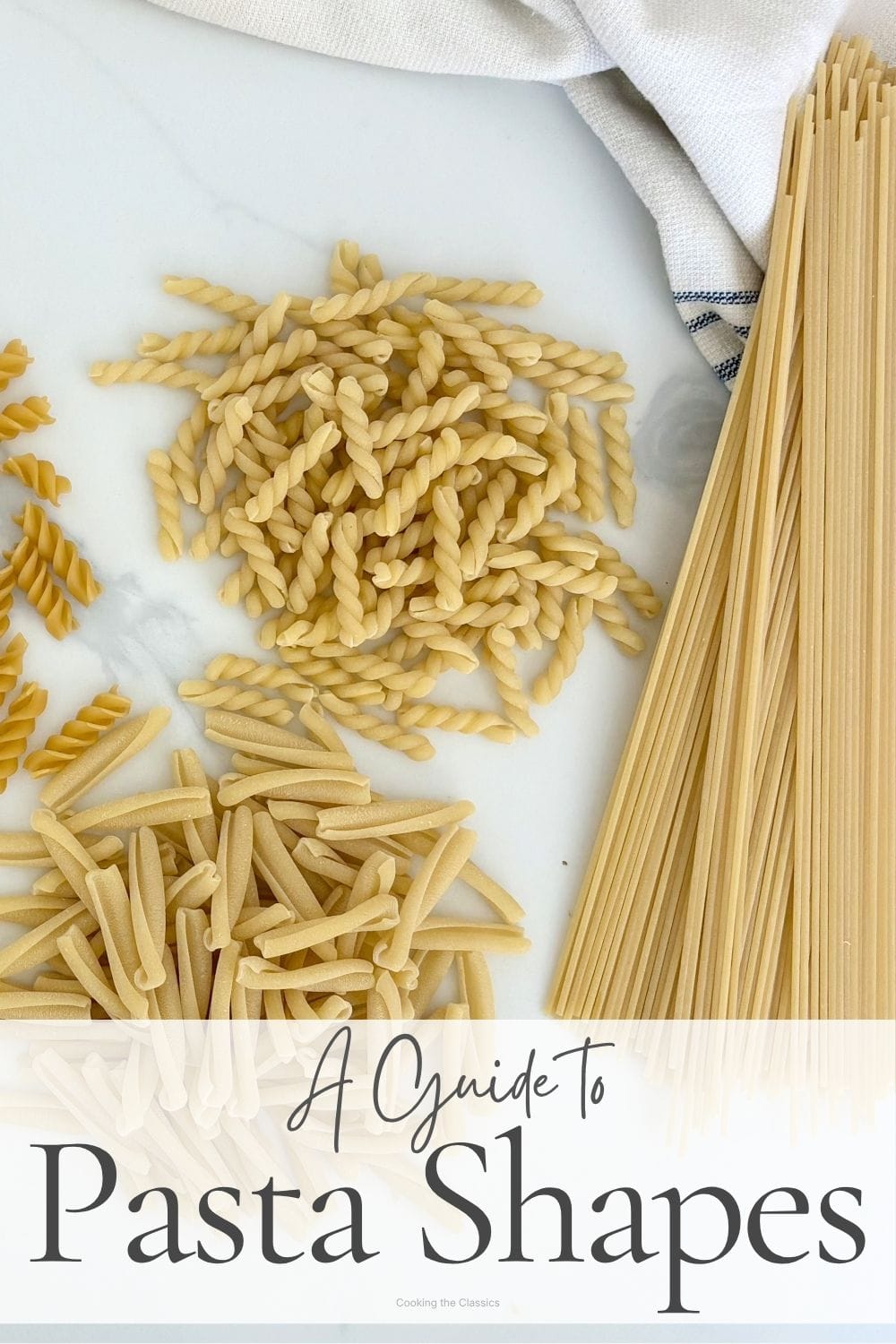
Walk through the pasta aisle of any grocery store and you’ll find dozens of shapes, but you don’t need to know all of them to cook Italian food well.
Most classic Italian recipes rely on a relatively small group of pasta shapes, each chosen because it works particularly well with a certain type of sauce.
Some shapes are better for thin tomato sauces. Others are designed to catch chunky vegetable sauces, ragù, or melted cheese. Choosing a pasta shape that suits the sauce helps the dish feel more complete, even when the ingredients themselves are very simple.
If you’re new to cooking pasta, start with a few versatile shapes and learn what they do well. That’s enough to cover most of the recipes you’ll cook at home.
Before getting started, it also helps to understand the basics of cooking pasta properly, from salting the water to finishing the pasta in the sauce. See my guide on How to Cook Pasta Properly.
Cooking through Italian recipes?
Get the 3-page Italian Wine Pairing Guide with what to pour with tomato sauces, chicken, and more.
Choosing the Right Pasta Shape
Different pasta shapes interact with sauces in different ways. Long strands are easy to coat evenly, while ridged, tube-shaped, and wider pastas can hold thicker sauces and larger ingredients.
For example, spaghetti is often used with simple tomato sauces or olive oil sauces, while wider pasta like fettuccine works well with butter, cream, or meat sauces. Short pasta shapes such as penne or rigatoni are good for thicker sauces, baked pasta dishes, and vegetable sauces.
You don’t need to know every pasta shape to cook Italian food. In fact, a small group of pasta shapes will work for most classic recipes.
Common Italian Pasta Shapes
Here are some of the pasta shapes I use most often in my kitchen.
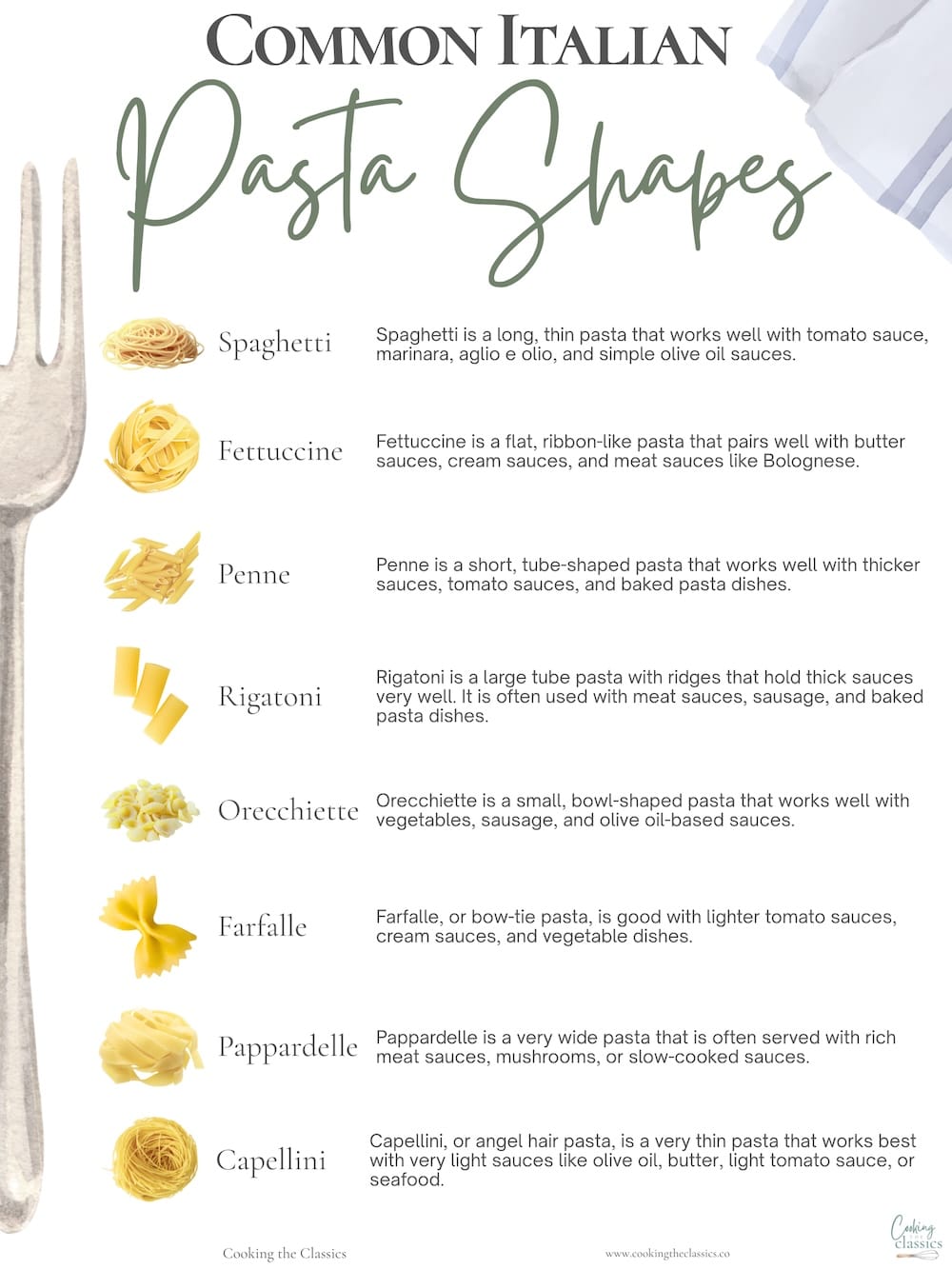
Spaghetti
Spaghetti is one of the most versatile pasta shapes and works well with many classic Italian sauces. It pairs naturally with tomato sauces, olive oil sauces, garlic-based sauces, and seafood preparations.
Fettuccine
Fettuccine’s wider shape gives richer sauces more surface area to cling to. It is commonly paired with butter sauces, cream sauces, and meat sauces such as Bolognese.
Penne and Rigatoni
These tube-shaped pastas are useful when a sauce contains pieces of meat or vegetables. The sauce can collect inside the pasta while the ridges help hold it on the outside. They are also popular choices for baked pasta dishes.
Orecchiette
Orecchiette is traditionally paired with vegetables and olive oil-based sauces. The small cup-like shape helps catch bits of vegetables, sausage, and sauce.
Pappardelle
Pappardelle is one of the widest ribbon pastas and is often served with slow-cooked meat sauces, mushroom sauces, and other hearty preparations.
Capellini
Capellini, sometimes called angel hair pasta, is extremely thin and works best with delicate sauces that won’t overwhelm it.
Pasta Shapes and Sauce Pairings
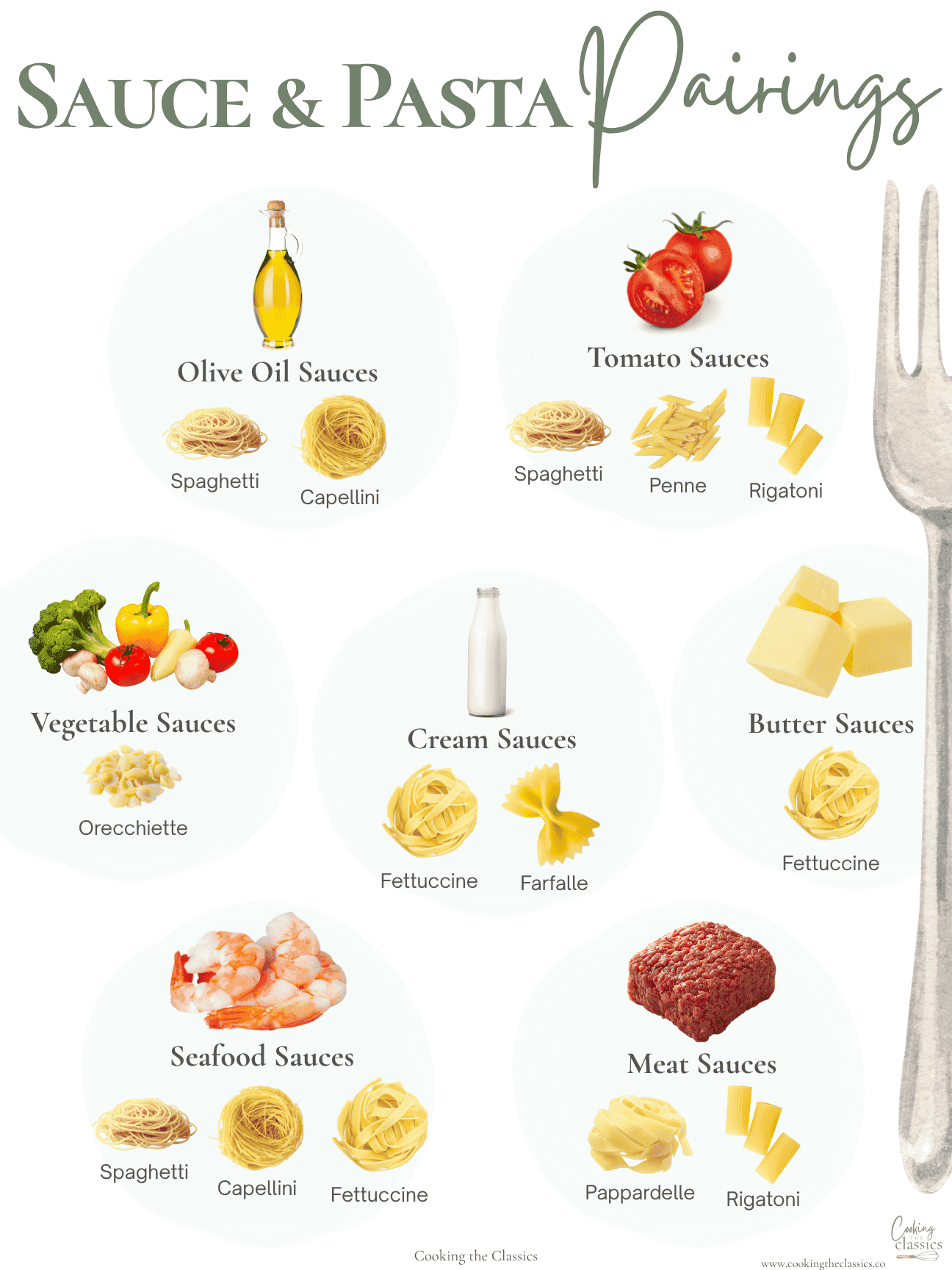
Once you understand the basic shapes, the next step is learning which sauces they are most commonly paired with.
Many traditional Italian recipes follow patterns that have developed over generations. While there are exceptions, these pairings are a useful place to start.
Tomato sauces are often paired with spaghetti, penne, or rigatoni. Olive oil sauces are commonly served with spaghetti or capellini. Rich meat sauces are frequently matched with pappardelle or rigatoni, while vegetable-based sauces often work well with orecchiette.
These pairings aren’t strict rules, but they help explain why certain combinations appear repeatedly in Italian cooking.
Pasta Shapes I Like To Keep On Hand
Keeping a few versatile pasta shapes in the pantry allows me to make most classic Italian dishes without making a trip to the store.
The pasta shapes I usually keep on hand are:
- Spaghetti
- Fettuccine
- Penne
- Rigatoni
- Orecchiette
- Small pasta for soup (like ditalini or small shells)
With these pasta shapes, you can make tomato sauces, meat sauces, pasta with vegetables, soups, baked pasta dishes, and simple olive oil or butter sauces.
What You Can Cook With These Pasta Shapes
With just a few pasta shapes, you can make many classic Italian meals, including:
- Spaghetti with tomato sauce
- Spaghetti with carbonara
- Fettuccine with sausage and bell peppers
- Baked rigatoni with Bolognese
- Pasta e fagioli
- Pappardelle with bolognese
You don’t need dozens of pasta shapes to cook Italian food regularly. A small group of pasta shapes will cover most classic dishes.
Many traditional Italian recipes specify a particular pasta shape, and it’s rarely an accident.
The shape affects how the sauce coats the pasta, how the dish feels to eat, and sometimes even how the recipe is traditionally served.
You don’t need to stock every pasta shape on the shelf, but understanding a few of the most common ones will make it easier to cook classic Italian recipes with confidence.