A Guide to Fresh Herbs in Italian Cooking
If you’ve ever skipped the fresh herbs because you weren’t sure what to do with them, you’re not alone.
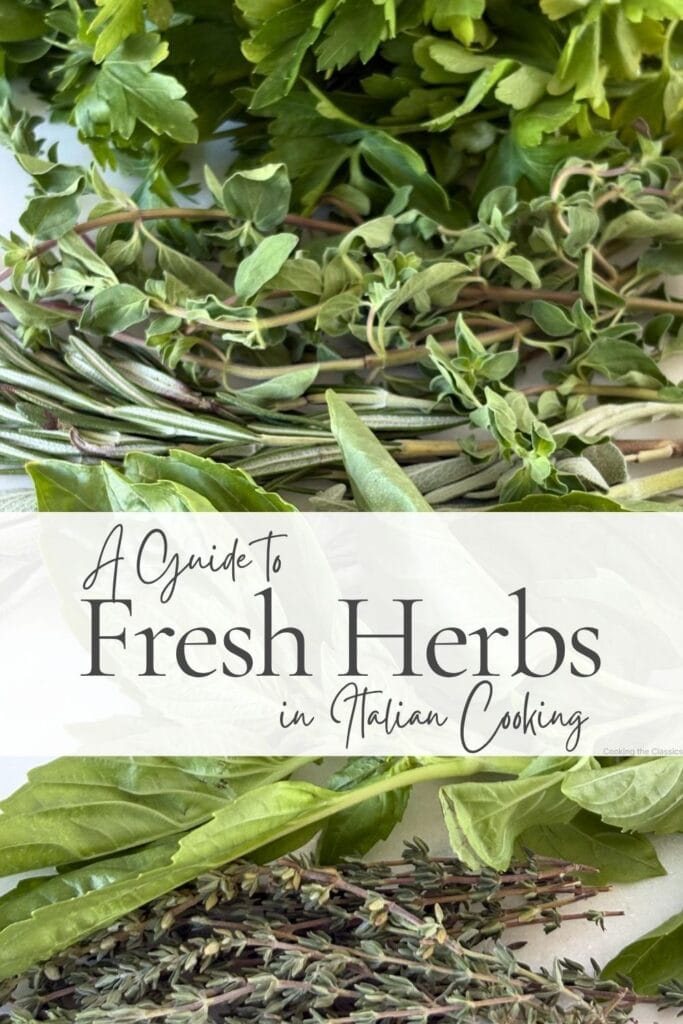
Fresh herbs can be one of those ingredients that sound great in theory but end up wilting in the back of the refrigerator because you’re not quite sure how to use them.
Should you buy fresh or dried? How much do you need? What do you actually do with a bunch of sage?
After cooking through Marcella Hazan‘s recipes, I realized I was buying the same herbs more often than others: basil, parsley, rosemary, sage, and oregano. This guide covers how I use them, how I store them, and a few practical tips that have made them easier to work with.
Cooking through Italian recipes?
Get the 3-page Italian Wine Pairing Guide with what to pour with tomato sauces, chicken, and more.
Basil
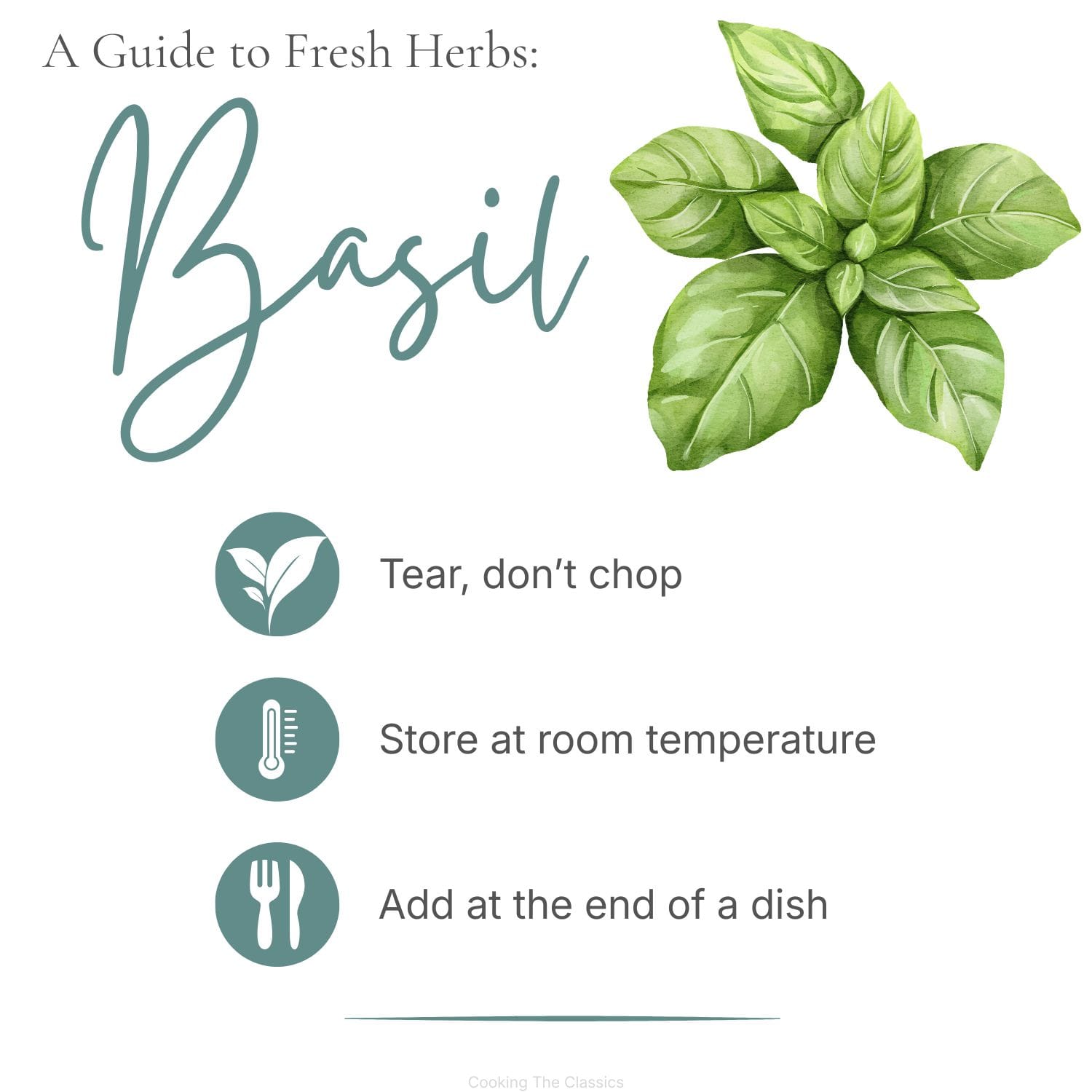
Basil is one of the easiest fresh herbs to keep on hand, whether it’s growing in a backyard garden, tucked into a patio container, or picked up at the grocery store. Because the leaves bruise easily, I prefer to tear them rather than cut them with a knife. Since prolonged heat can dull its flavor and cause it to become bitter, basil is best added near the end of cooking or just before serving.
How It’s Used
- Torn over tomato salads
- Added to bruschetta
- Stirred into simple tomato sauces
- Scattered over finished dishes
Pairs Well With
Tomatoes, mozzarella, olive oil, garlic, and Parmigiano-Reggiano
How It’s Stored
Store at room temperature in a jar of water like a bouquet. Avoid refrigeration, which can blacken the leaves.
Recipes to Try
Parsley
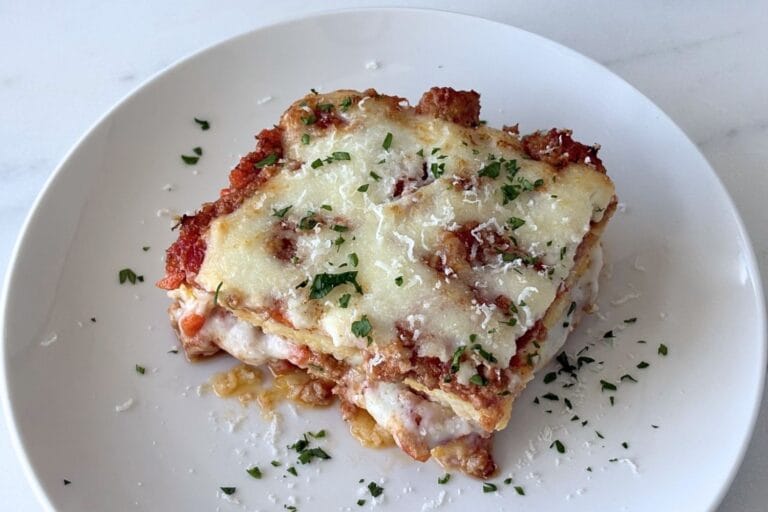
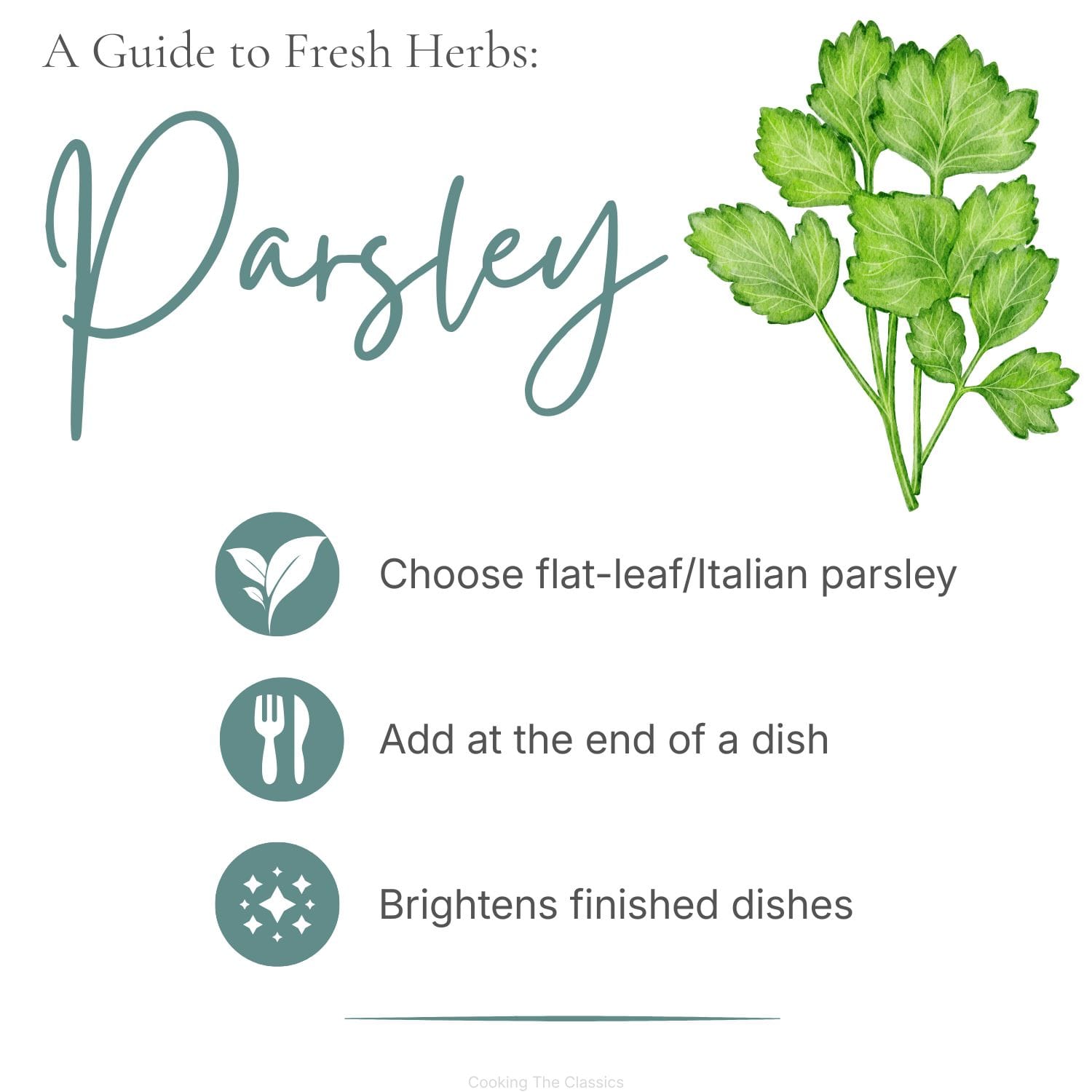
Parsley is the herb I use most often. Italian flat-leaf parsley has a fresher, more robust flavor than curly parsley and is the variety most commonly used in Italian cooking. It shows up in soups, chicken dishes, seafood recipes, and vegetable preparations, usually stirred in at the end of cooking or scattered over finished dishes to brighten the flavors already on the plate.
How It’s Used
- Chopped into sauces
- Sprinkled over finished dishes
- Combined with lemon and garlic
- Stirred into soups before serving
Pairs Well With
Lemon, garlic, fish, chicken, and beans
How It’s Stored
Wrap loosely in a damp paper towel and refrigerate in a partially open bag.
Recipes to Try
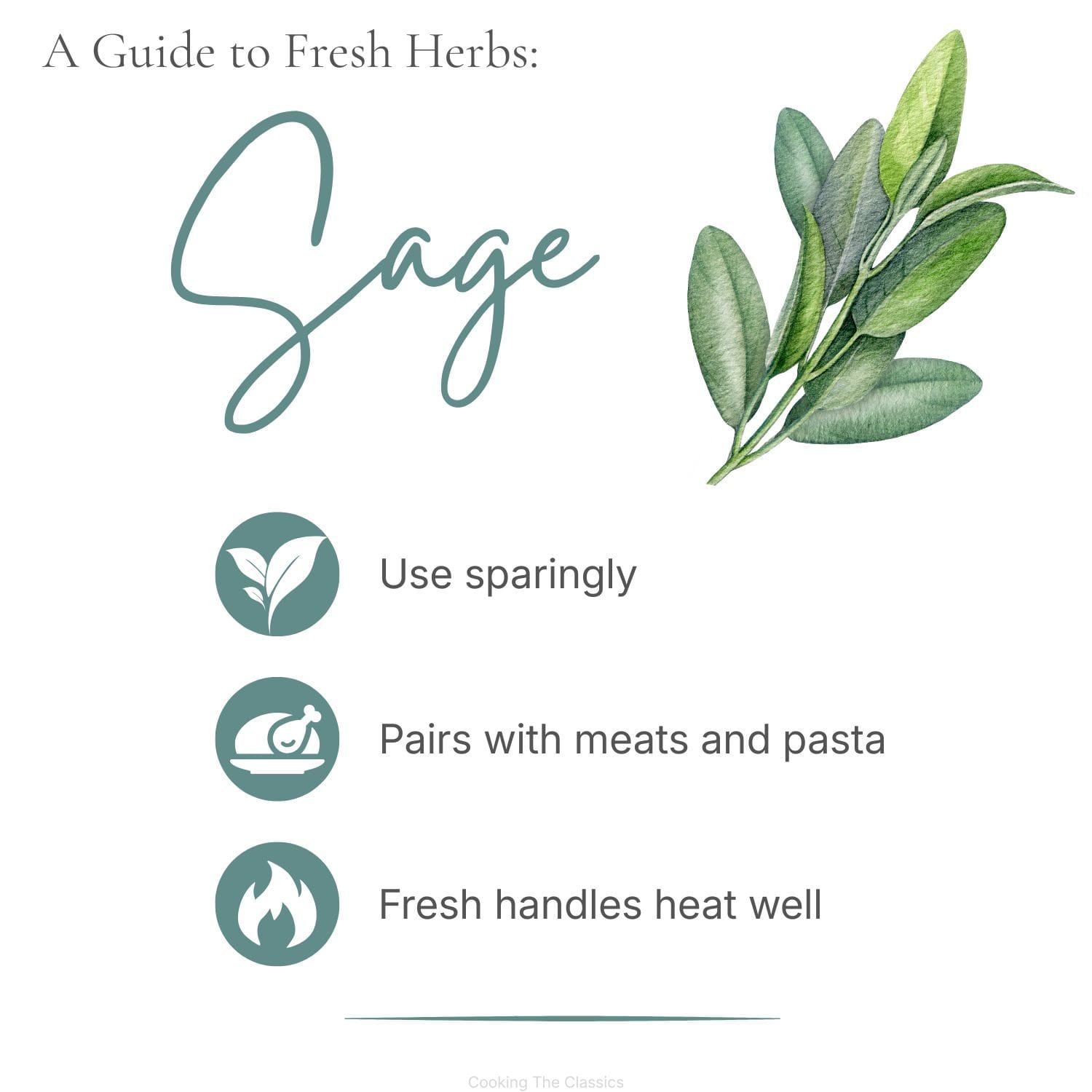
Sage
I used to think of sage as a very strong herb reserved for autumn cooking, but it can be much more subtle than that. In many Italian recipes, just a few leaves are enough. Fresh sage holds up surprisingly well to heat and is often added to pasta dishes, meats, and pan sauces. If you’ve never cooked with sage before, start with a few leaves. You can always add more next time.
How It’s Used
- Melted into butter sauces
- Paired with pasta
- Added to chicken and veal dishes
Pairs Well With
Butter, Parmigiano-Reggiano, chicken, and mild cheeses
How It’s Stored
Wrap loosely in a dry or slightly damp paper towel and refrigerate. Fresh sage holds up well and keeps longer than more delicate herbs.
Recipes to Try
Rosemary
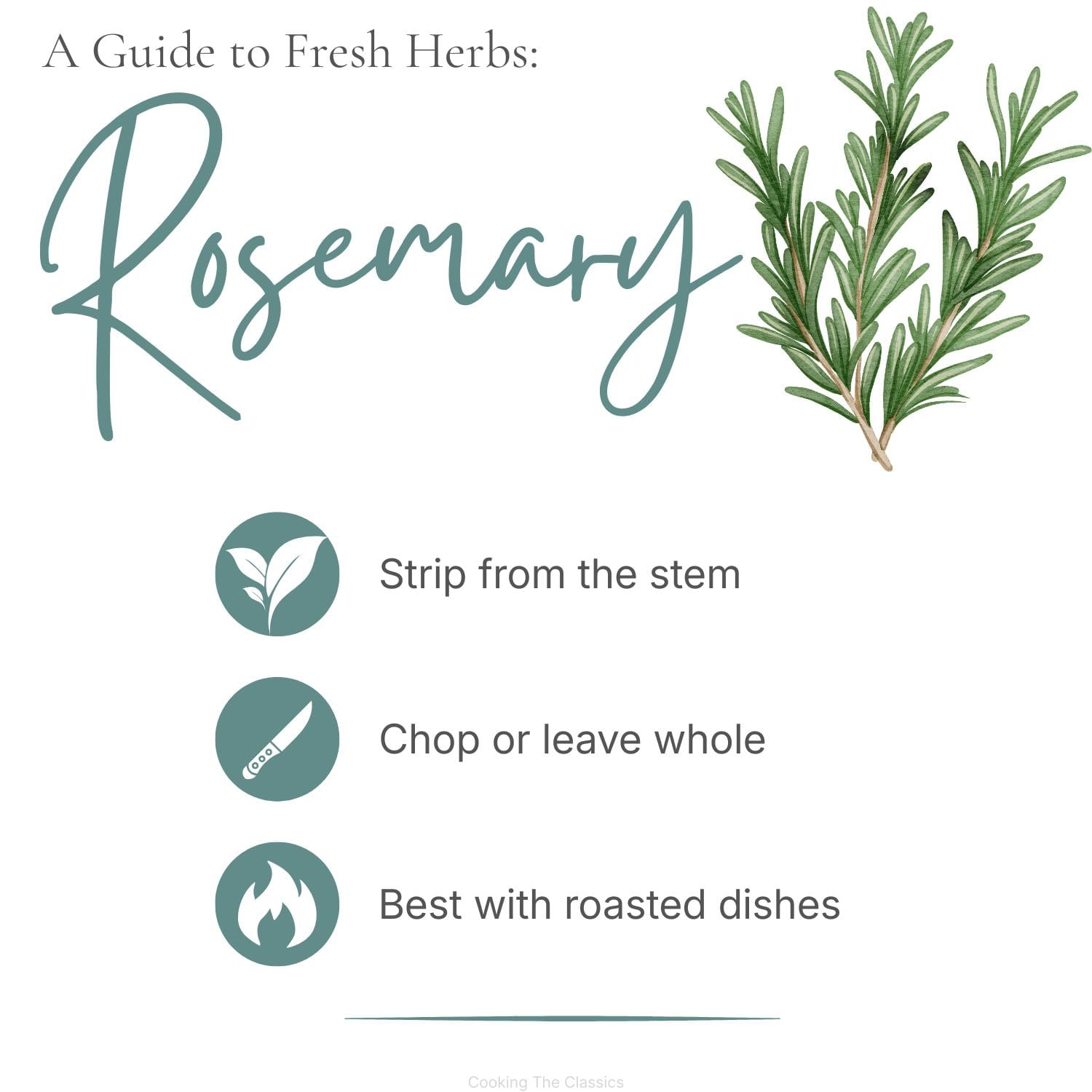
Rosemary has a strong, unmistakable flavor, but you don’t need much of it. To use fresh rosemary, pull the needles from the woody stem before adding them to the dish. You can leave the needles whole, as I did with Marcella’s pan-roasted chicken, for little bursts of flavor throughout the dish. If you prefer a more even distribution, you can finely chop them instead. Either way, a small amount goes a long way in roasted chicken, potatoes, and braised meats.
How It’s Used
- Sprinkled on chicken before roasting
- Added to braises and roasts
- Infused into olive oil
Pairs Well With
Garlic, olive oil, potatoes, and chicken
How It’s Stored
Refrigerate wrapped in a paper towel inside a bag or container. Because it’s hardy, it often keeps for one to two weeks.
Recipes to Try
- Pan-Roasted Chicken with Rosemary and Garlic
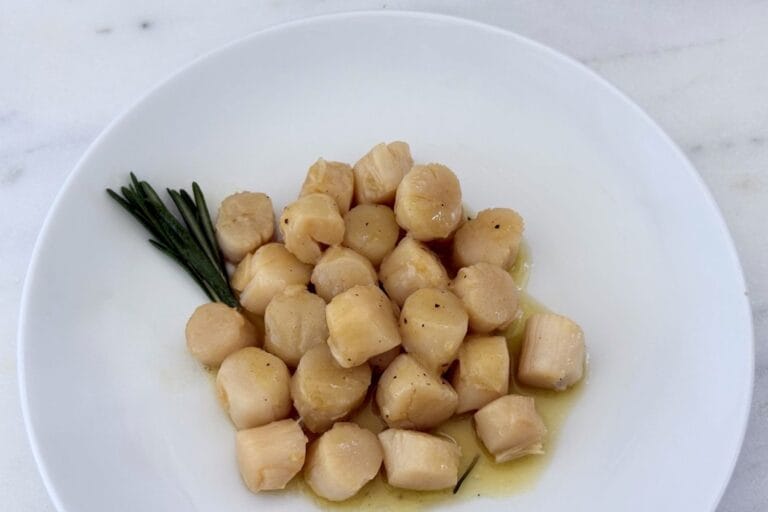
- Scallops with Rosemary and Lemon
Oregano
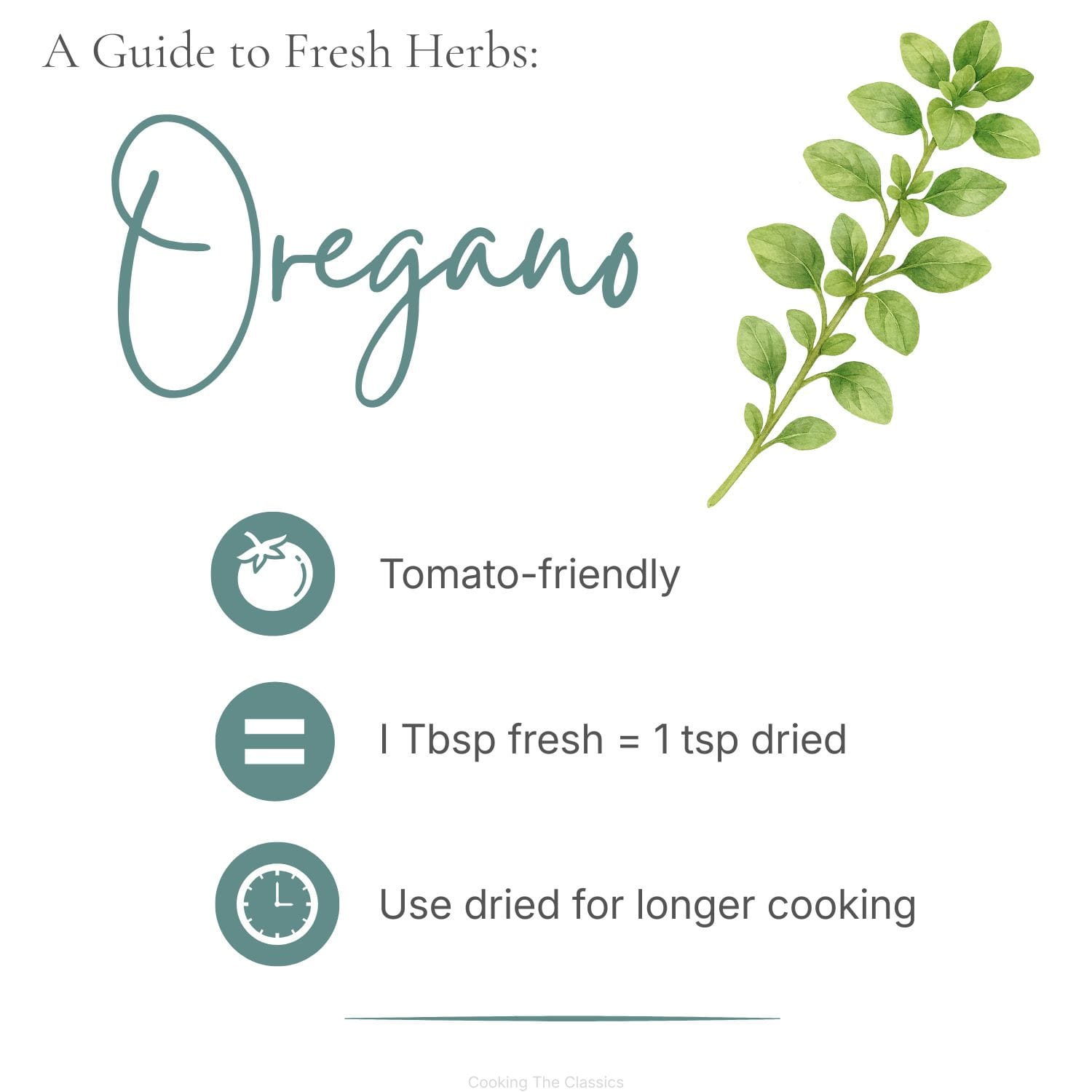
Oregano is probably the herb people expect to see most often in Italian cooking, but fresh and dried oregano behave quite differently. Fresh oregano has a milder flavor and can be added toward the end of cooking or scattered over finished dishes. Dried oregano is more concentrated and holds up well in recipes that simmer for longer periods of time. If you’re substituting one for the other, use a lighter hand with the dried version.
How It’s Used
- Added to tomato sauces
- Used in pizza preparations
- Paired with roasted vegetables
Pairs Well With
Tomatoes, olives, capers, and eggplant
How It’s Stored
Refrigerate loosely wrapped in a paper towel. If you won’t use it quickly, dried oregano is a practical pantry substitute.
Recipes to Try
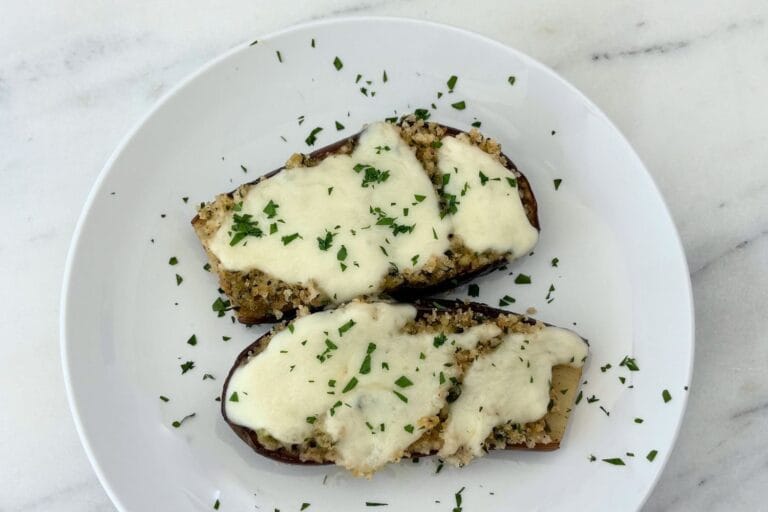
- Eggplant Parmesan (with dried oregano)
Fresh vs. Dried Herbs
Forgot to buy fresh herbs? It happens.
As a general rule, you can substitute 1 teaspoon of dried herbs for every 1 tablespoon of fresh herbs called for in a recipe. Dried herbs are more concentrated, so you don’t need as much.
Oregano and rosemary are the easiest swaps. If a recipe calls for fresh and all you have is dried, go ahead and use it. Dried oregano works especially well in tomato sauces and other dishes that cook for a while. The same is true for rosemary in soups, braises, and roasted dishes.
Basil and parsley are a little different. They’re often added at the end of cooking or sprinkled over the finished dish, and dried versions don’t provide the same fresh flavor. If a recipe calls for fresh basil or parsley and they’re a noticeable part of the dish, it’s worth picking them up from the store if you can.
The good news is that you don’t need to overthink it. If fresh herbs aren’t available, dinner will still turn out just fine. But when a recipe highlights fresh basil or parsley, that’s when I try not to skip them.
You don’t need to buy every herb at the grocery store to cook Italian food at home.
Start with these five, and you’ll have what you need for many of the classic recipes you’ll come across.
The next time a recipe calls for fresh herbs, I hope you’ll feel a little more confident bringing them home and putting them to use.