Marcella Hazan Bolognese Recipe (Classic Italian Ragù)
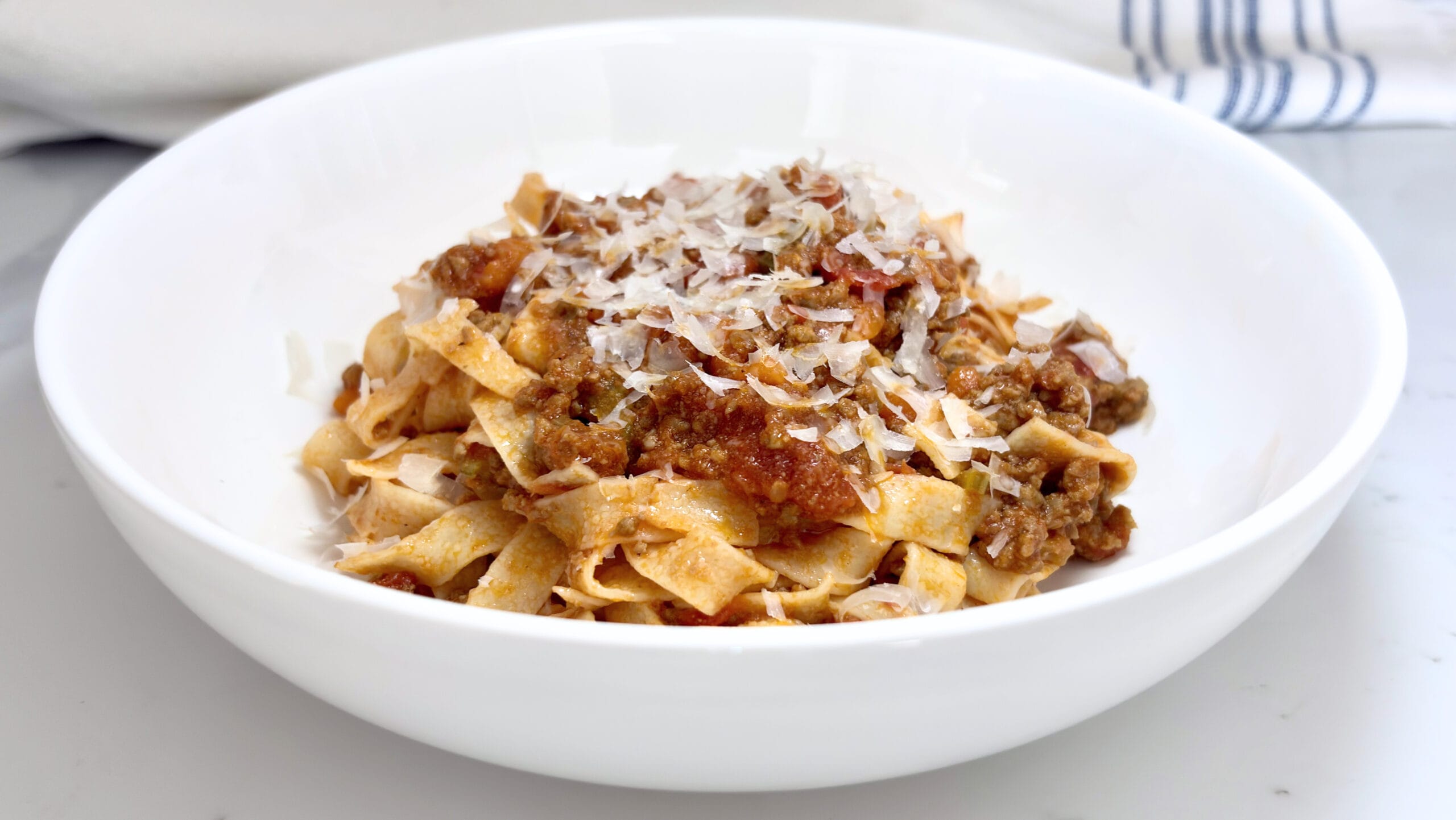
Marcella Hazan’s Bolognese is one of her most famous recipes and is often considered one of the definitive versions. Looking through the ingredients, I saw plenty that I already associated with Bolognese: carrots, celery, onion, beef, tomatoes, and wine.
What surprised me was the addition of milk and the use of white wine instead of red. I was curious how both would change the sauce and whether it could still develop the deep flavor I expected from Bolognese using what I thought of as more “calm” ingredients.
I also noticed how distinctly Marcella divided the recipe into stages. The milk has to cook away before adding the wine, the wine has to cook away before adding the tomatoes, and only then does the long, slow simmer begin. That certainly explained the cooking time.
I carved out a Sunday afternoon to make it, and while the process took several hours, it didn’t require me standing over the stove the entire time. I was able to move around the house and do other things, checking in on the sauce as it slowly cooked.
Cooking through Italian recipes?
Get the 3-page Italian Wine Pairing Guide with what to pour with tomato sauces, chicken, and more.
About This Recipe
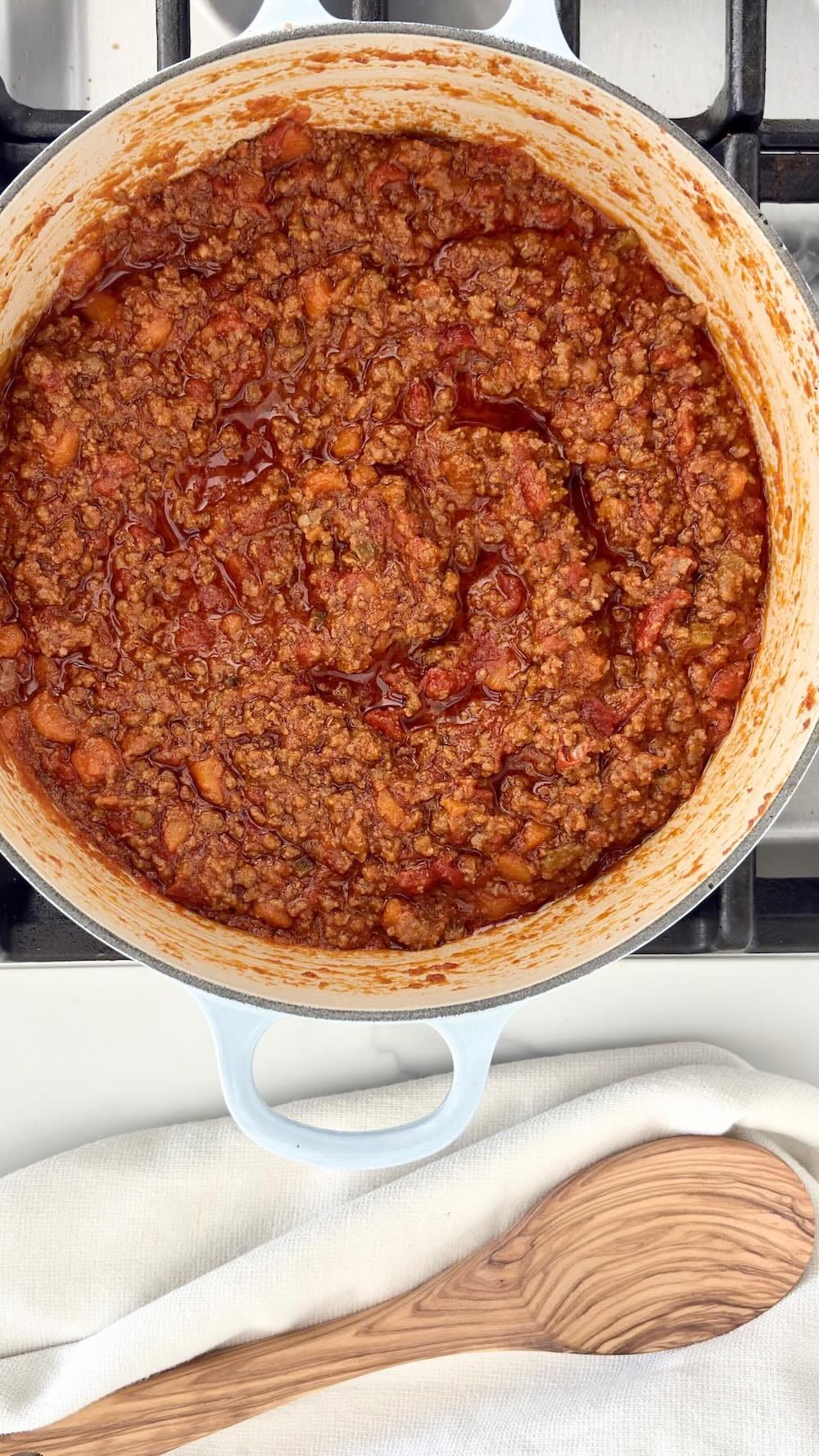
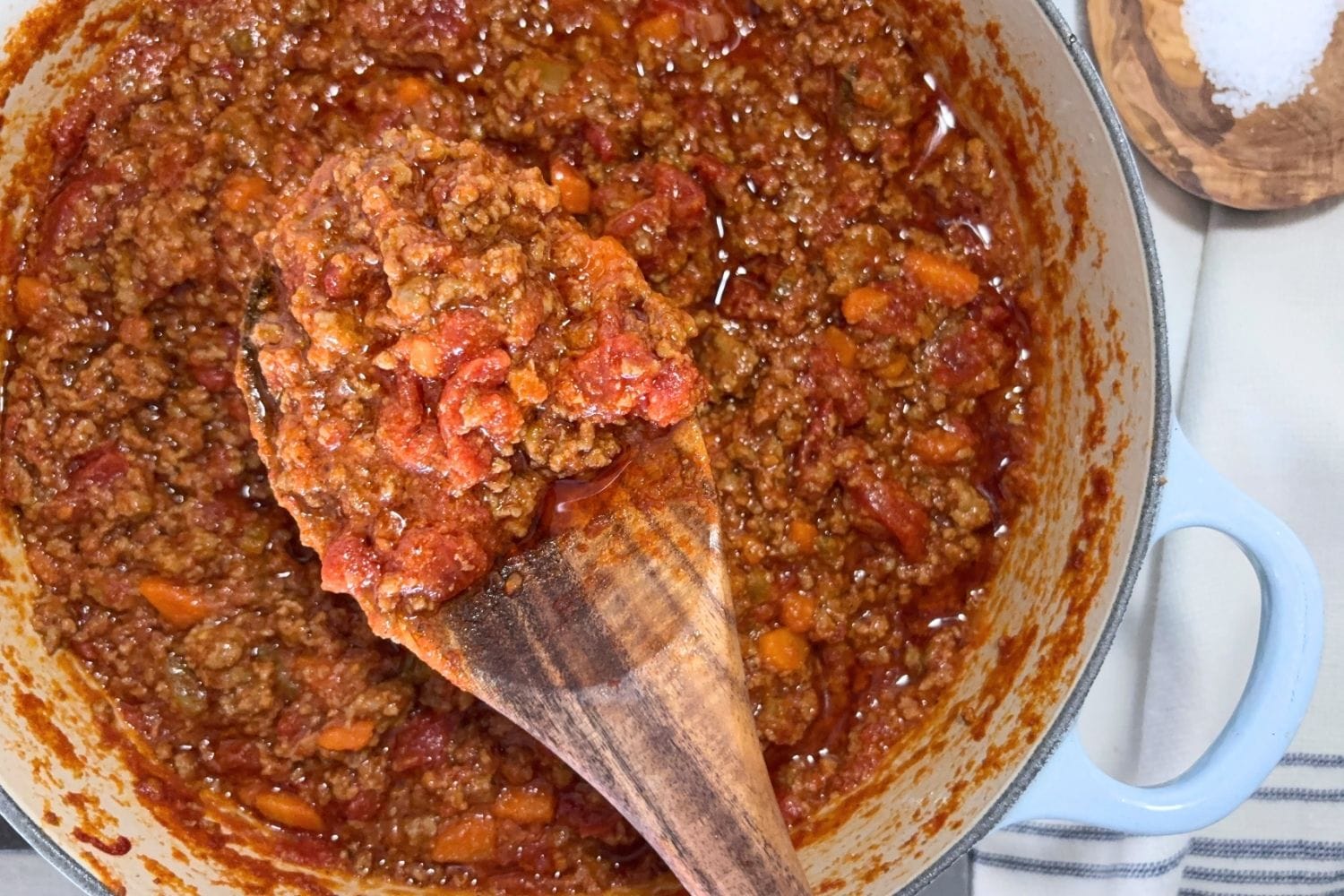
Once the tomatoes are added, the biggest thing this recipe requires is time. The sauce stays at a very low simmer for several hours, with just an occasional bubble breaking the surface. I found that keeping the heat this low was important. This isn’t a sauce you want to rush with a more vigorous simmer.
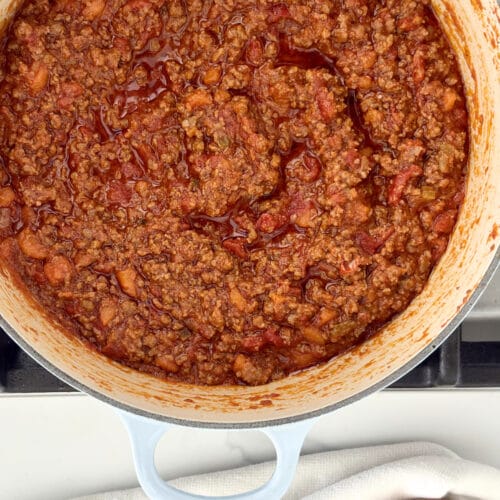
Don’t be concerned if it looks fairly loose earlier in the cooking process. Over the next few hours, the liquid gradually reduces, the meat becomes very tender, and the sauce gets noticeably thicker and more concentrated.
Marcella gives a range for the simmering time rather than one exact endpoint, so I found it more helpful to watch the sauce than the clock. By the end, there shouldn’t be much watery liquid left in the pot, and the sauce should be thick enough to cling easily to the pasta.
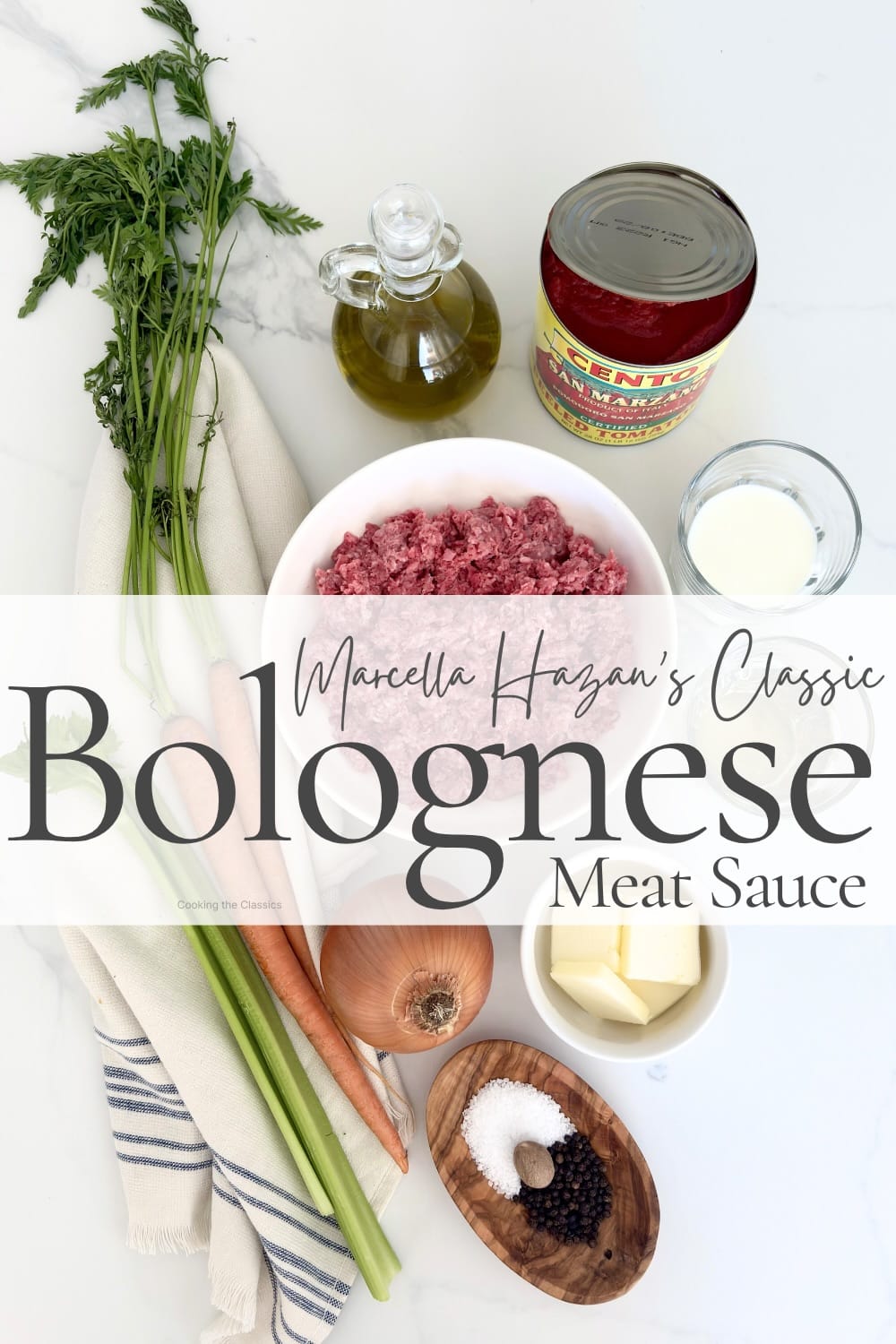
Ingredients
- Ground beef chuck
- Onion
- Carrot
- Celery
- Butter
- Olive oil
- Whole milk
- Dry white wine
- Can of whole, peeled tomatoes
- Salt
- Pasta (tagliatelle, fettuccine, or pappardelle)
- Parmesan cheese
Ingredient Notes
1. Ground Beef Chuck
Look for ground chuck that’s around 80% lean and 20% fat. The extra fat helps keep the meat tender during the long cooking time and gives the finished sauce more flavor. Since the sauce simmers for several hours, I wouldn’t substitute very lean ground beef here.
2. White Wine
I was surprised that Marcella calls for white wine rather than red, which is what I had always associated with Bolognese. Use a dry white wine like Vermentino, Soave, or Verdicchio rather than cooking wine. The wine cooks down before the tomatoes are added, so you won’t taste it distinctly in the finished sauce, but it adds acidity and another layer of flavor.
3. Soffritto
Onion, carrot, and celery form the vegetable base of the sauce. They’re the same three vegetables commonly used for soffritto, although Marcella handles them a little differently in this recipe. Rather than cooking them all together from the start, the onion cooks first in oil and butter, followed by the carrot and celery. By the time the sauce has simmered for several hours, the vegetables have softened into the sauce rather than remaining distinct pieces.
The Recipe
Marcella Hazan’s Bolognese Meat Sauce
Ingredients
- 1 tbsp olive oil
- 4 tbsp butter
- ½ cup chopped onion
- ⅔ cup chopped celery
- ⅔ cup chopped carrot
- ¾ lb ground beef chuck
- salt and fresh-ground pepper
- 1 cup whole milk
- 1 whole nutmeg
- 1 cup dry white wine
- 1 ½ cups canned peeled tomatoes, cut up, with their juices
- 1½ lb rigatoni pasta, or any smaller noodle with ridges
- Parmigiano Reggiano cheese, for serving
Instructions
- Place the oil, butter, and chopped onion in a large pot and turn the heat to medium.
- Cook and stir until the onion is translucent.
- Add celery and carrots, cooking and stirring for 2-3 minutes.
- Add the ground beef, a large pinch of salt and some pepper.
- Crumble the meat with a fork or wooden spoon and cook until no red remains.
- Add the milk and let it simmer, stirring frequently, until it has bubbled away completely.
- Add a tiny grating of nutmeg and stir.
- Add the wine, simmering until it evaporates.
- Add the tomatoes and stir to cover the ingredients well. Once the tomatoes come to a boil, lower the heat to bring it to the "laziest of simmers."
- Cook, uncovered, for three hours or more, stirring from time to time.
- Salt, as needed.
- Toss with pasta and 1 tbsp butter. Serve with freshly grated Parmesan on the side.
Notes
Cooking Tip: Look for the “Laziest of Simmers”
Marcella describes the heat as the “laziest of simmers,” which is a helpful way to judge it. You don’t want the sauce actively bubbling. Look for an occasional bubble breaking the surface while the sauce cooks slowly and steadily.
If it’s bubbling continuously, lower the heat. The several-hour cooking time is intentional, giving the meat time to soften and the sauce time to reduce without cooking too aggressively.
Serve With
- Tagliatelle
- Rigatoni
- Fusilli
- Polenta
- Parmesan cheese
- Simple green salad
- Crusty bread
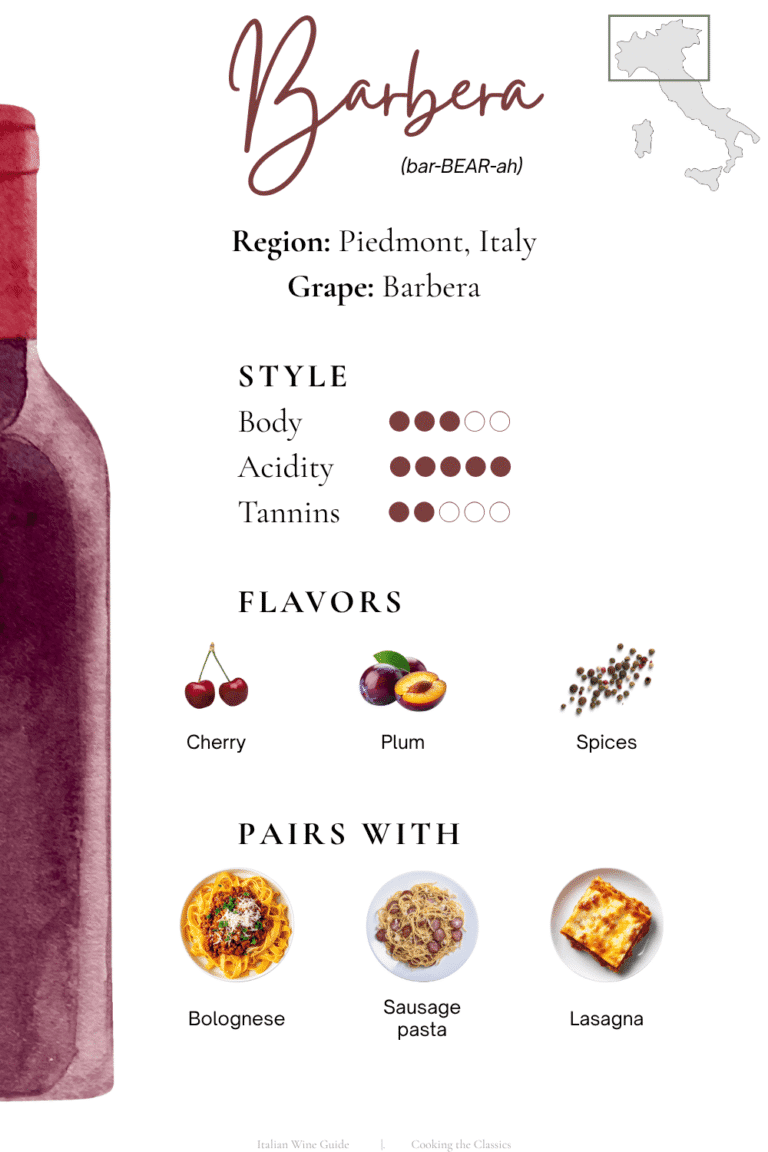
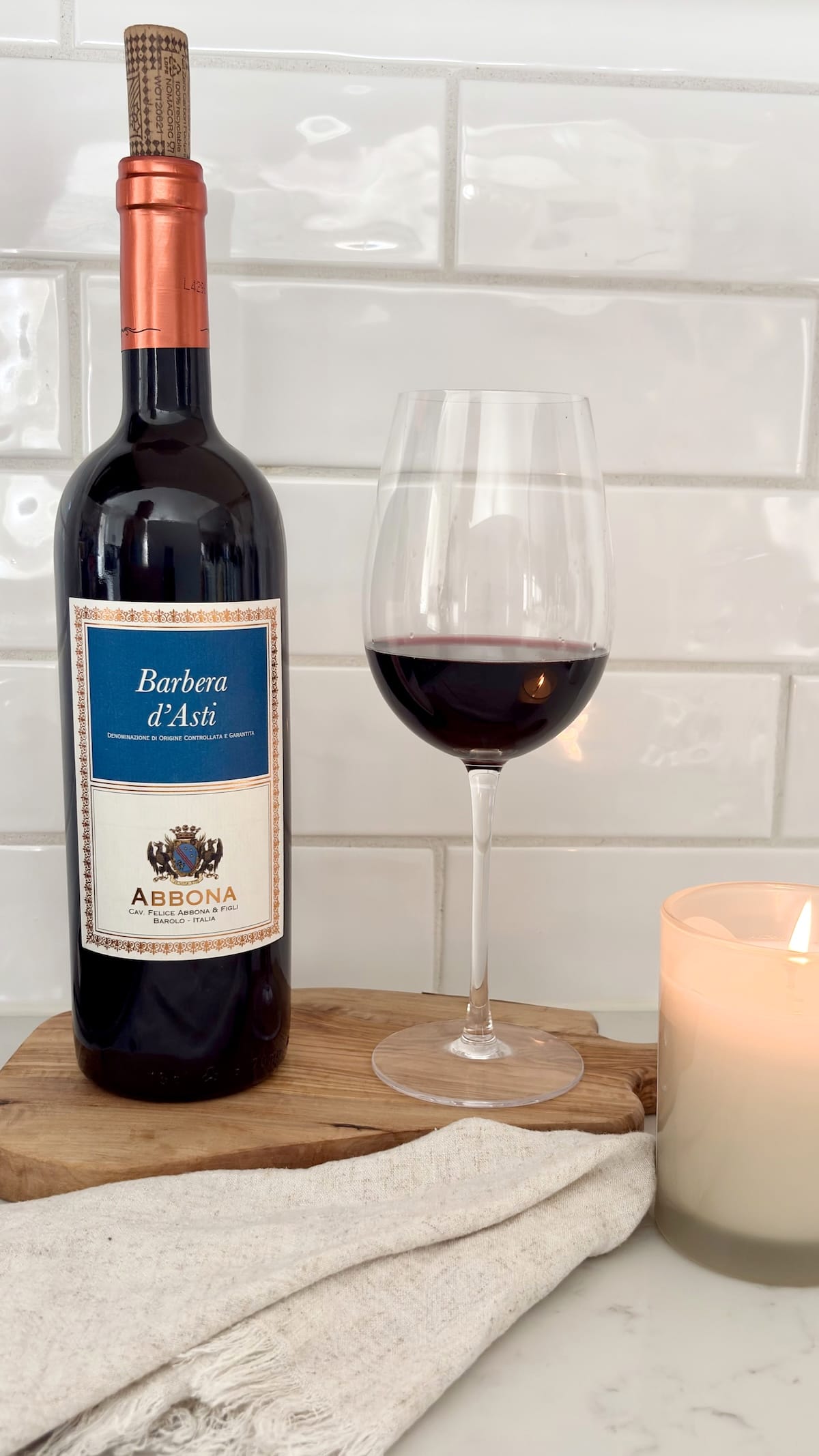
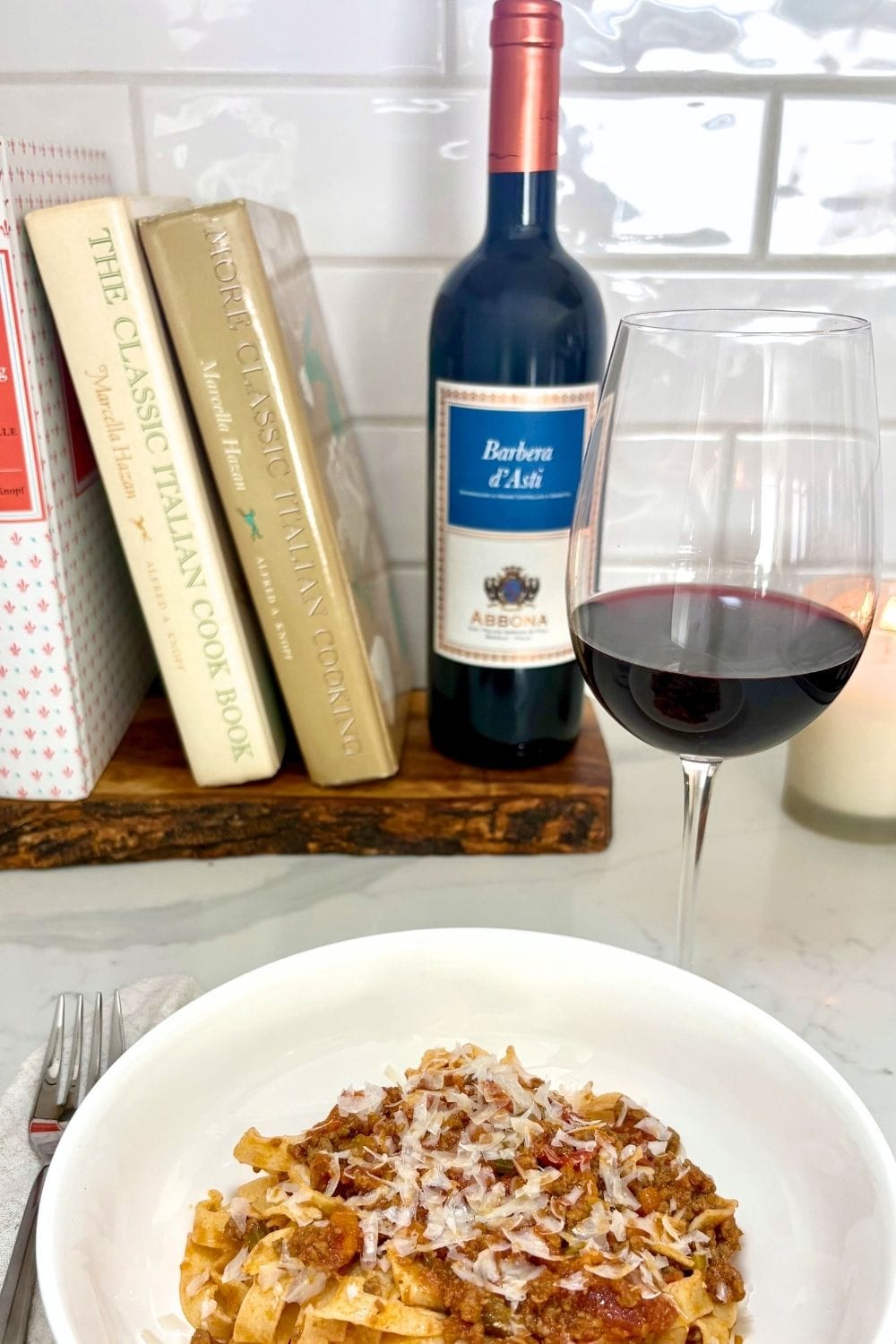
Wine Pairing: Barbera
Barbera works especially well with Bolognese because its naturally high acidity cuts through the richness of the beef and butter without overpowering the sauce. It also has relatively low tannins, which I like here since the wine doesn’t compete with the long-cooked, concentrated flavors of the Bolognese.
I prefer Barbera slightly cool rather than at room temperature. Aim for around 60–65°F, which keeps the wine tasting fresh while still allowing its flavor to come through.
You can find more Barbera styles and pairing ideas in the full guide below.
What I liked most about this recipe is how different it is from many restaurant-style Bolognese sauces.
The tomatoes support the sauce rather than dominate it, allowing the meat, milk, and wine to remain at the center. Even after several hours of cooking, I didn’t find it overly heavy or tomato-forward. The sauce was thick enough to cling to the pasta, but still tasted distinctly different from the Bolognese sauces I’d had before.
I also liked having enough sauce left to use in other recipes. After the first bowl of pasta, the leftovers can go into baked rigatoni or lasagna later in the week, which makes the several hours spent cooking it feel much more worthwhile.
For the tools and ingredients used here, visit the shop page.
If you liked this recipe, you might also like:
- Baked Polenta with Bolognese
- Baked Rigatoni with Bolognese
- Marcella Hazan’s Chicken Cacciatore (New Version)
Download the Italian Wine Pairing Guide for a quick reference when choosing wine:
Next up in Cooking the Classics: Roast Chicken with Lemons
About Stephanie
I’m cooking through classic cookbooks one recipe at a time, sharing what works, what surprises me, and what I learn along the way. Every recipe is cooked and tested in my home kitchen, with a wine pairing to enjoy alongside it.