How to Make Classic Italian Béchamel Sauce
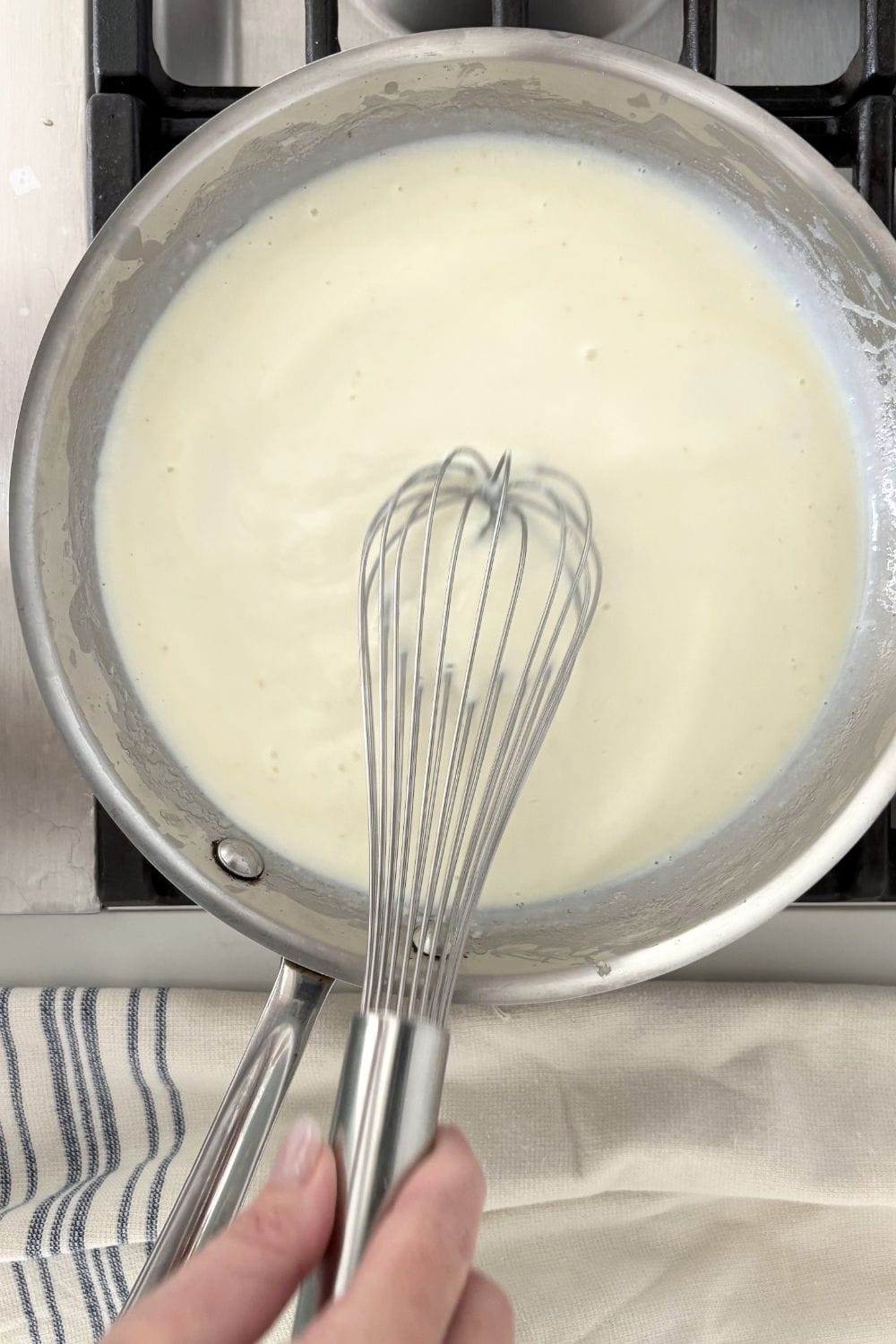
Béchamel is a white sauce made from butter, flour, and milk. It’s often used in baked pasta dishes like lasagna and baked rigatoni, where it adds a smooth, creamy layer between the other components of the recipe. I like using béchamel because it provides the creaminess of cheese without adding another strong flavor. Its smooth consistency also allows it to work its way between layers and coat the other ingredients more evenly than cheese alone.
It’s used across a range of recipes, from pasta to vegetables to gratins, and also works as a base for other sauces. As it cooks, the butter and flour form a base that thickens when the milk is added. The result is a sauce that coats easily and blends into the dish rather than standing apart.
Cooking through Italian recipes?
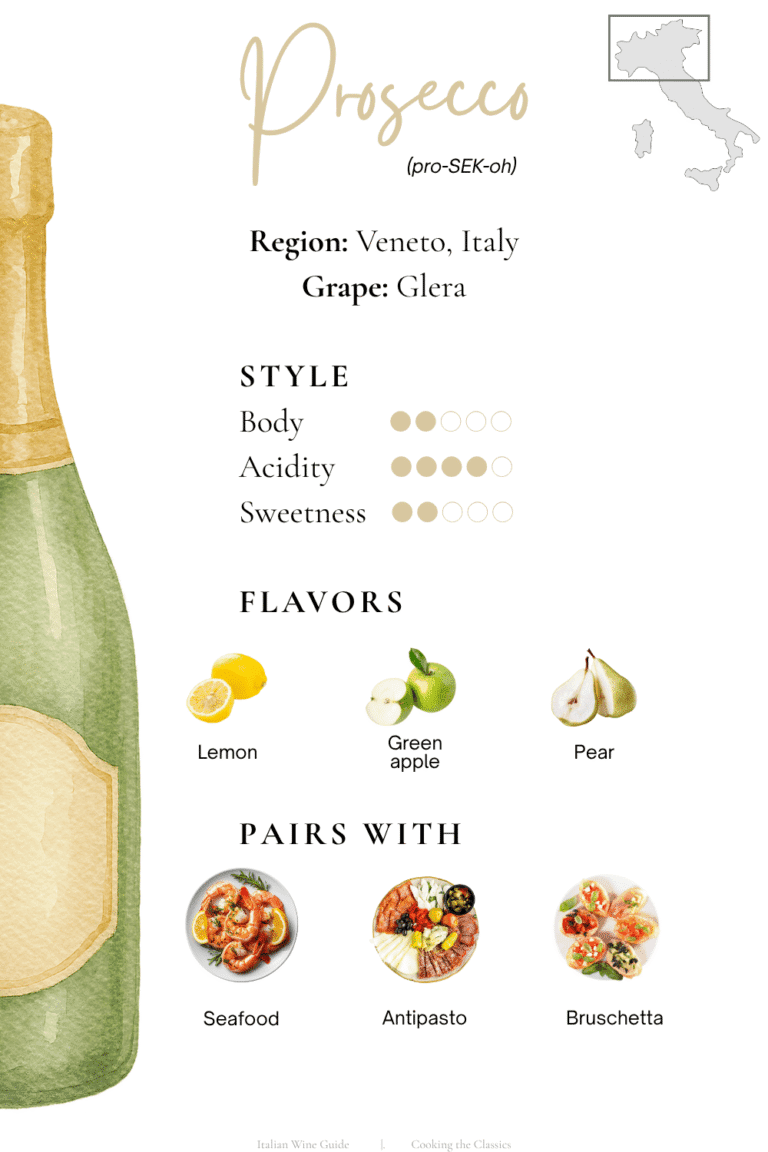
Get the 3-page Italian Wine Pairing Guide with what to pour with tomato sauces, chicken, and more.
About This Recipe
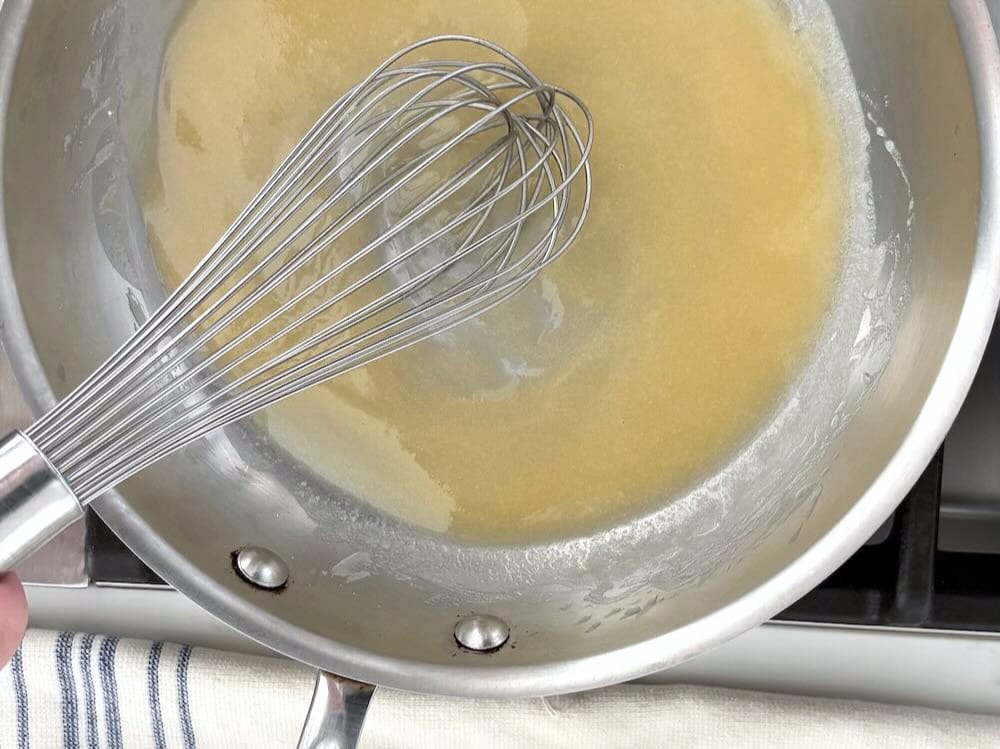
Béchamel starts with a roux, a mixture of butter and flour cooked together before adding the milk. The flour only needs to cook briefly. You aren’t looking for it to brown, but rather to lose its raw flour taste while keeping the sauce pale.
The milk is added gradually while whisking, especially at the beginning when the roux is at its thickest. Once the first additions of milk have been completely incorporated, the remaining milk becomes much easier to whisk in smoothly. The sauce will look quite thin at first, but it thickens as it cooks.
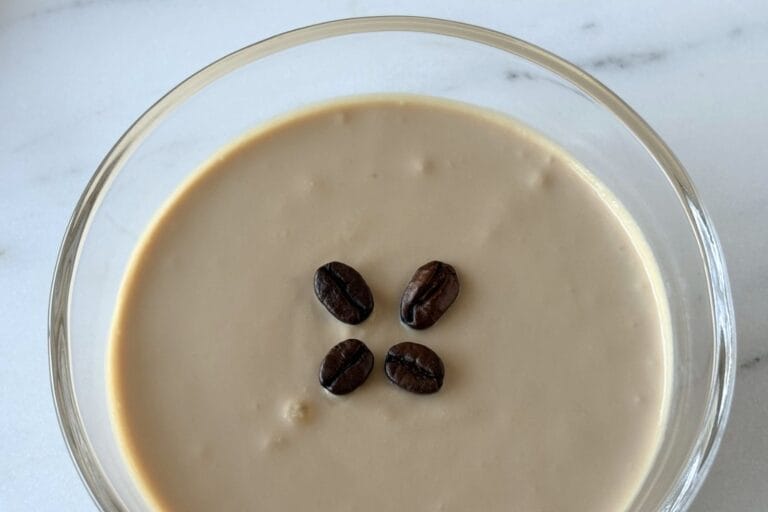
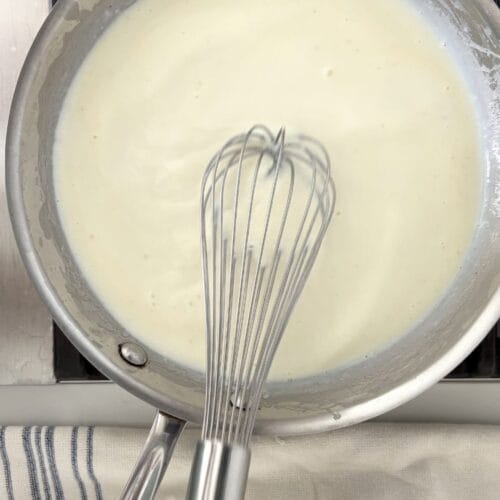
One of the most helpful ways to judge béchamel is by texture rather than time. When it’s ready, it should be smooth and thick enough to coat the back of a spoon while still being easy to pour. If it becomes thicker than you need, a little additional milk can loosen it again.
The final consistency can also be adjusted depending on how the béchamel will be used. A thinner sauce works well when you want it to coat vegetables or blend easily into another dish, while a thicker béchamel works better in layered or baked dishes like lasagna.
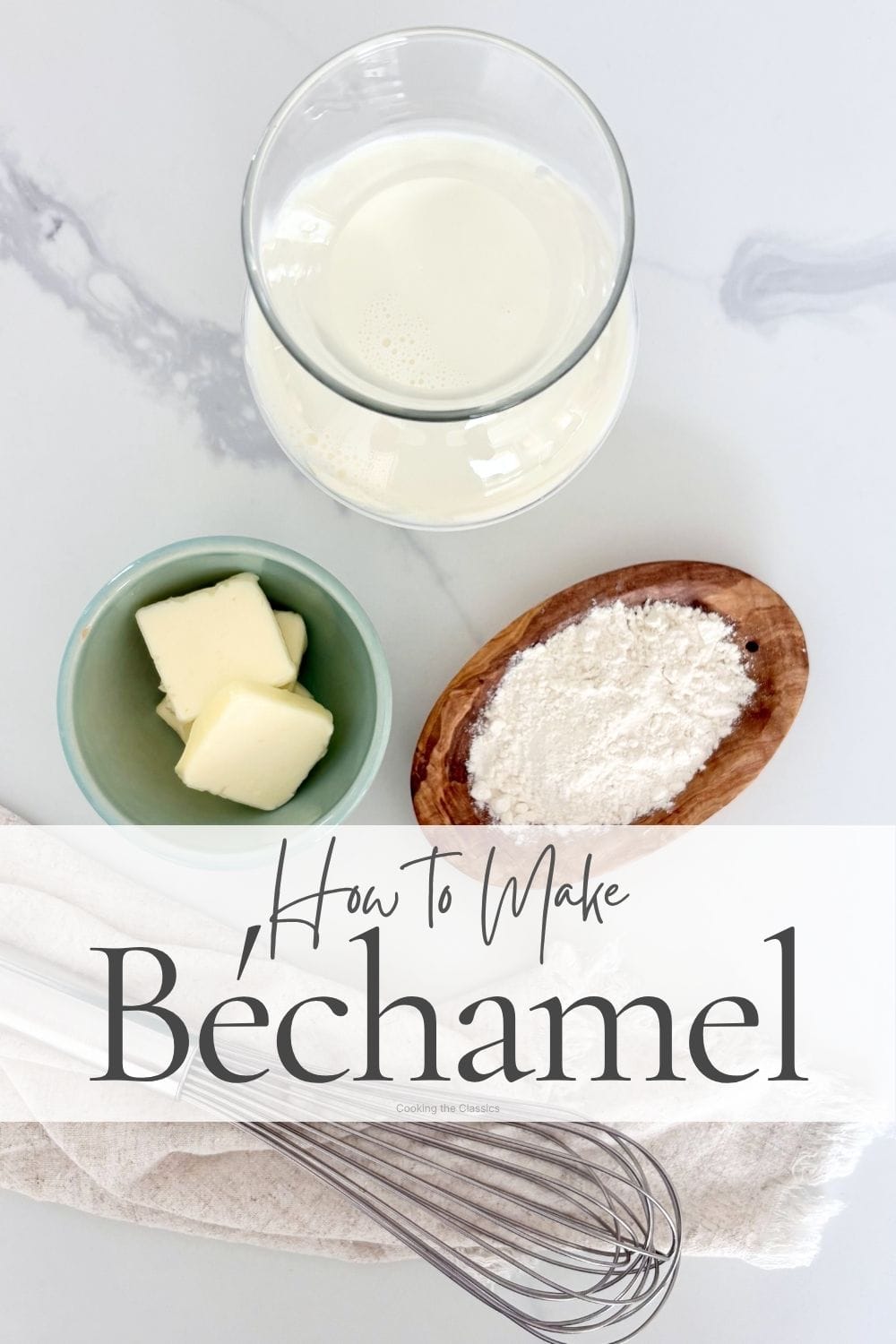
Ingredients
- Butter
- Flour
- Milk
- Salt
- Nutmeg (optional)
Ingredient Notes:
1. Butter
Use unsalted butter if possible so you can control the salt level. The butter and flour form the base of the sauce and it is always easier to add salt if needed, than try to adjust for something too salty.
2. Milk
Whole milk works best for a smooth and creamy sauce. Warm the milk slightly by keeping it on the counter for a bit before adding it to the sauce. This helps to prevent lumps.
3. Whole Nutmeg
While Marcella does not include nutmeg in her original recipe, a very small amount of freshly ground nutmeg can add a subtle depth of flavor that works especially well in cream sauces.
The Recipe
Classic Italian Béchamel Sauce
Ingredients
- 2 cups whole milk
- 4 tbsp butter
- 3 tbsp all-purpose flour
- ¼ tsp salt
- ⅛ tsp ground nutmeg (optional)
Instructions
- Put the milk in a saucepan and turn the heat to low. Keep it close to where you will prepare the sauce.
- In a heavy-bottomed saucepan, add the butter and turn the heat to low.
- After the butter has melted, add the flour in and whisk or stir with a wooden spoon.
- After all of the flour has been added, cook for 1-2 minutes, continuing to stir.
- Remove from heat.
- Add the hot milk, a bit at a time (approximately ¼ cup), whisking steadily until it has all been incorporated.
- Repeat two more times, then add larger amounts of milk, continuing to whisk, until you have a smooth, white sauce.
- Place the pan back on low heat, add salt and nutmeg (optional), and stir until it reaches your desired consistency.
Notes
Cooking Tip: Watch the Heat
Béchamel doesn’t need high heat to thicken. Keep the heat low to moderate and give the sauce time to thicken gradually, whisking regularly so it stays smooth and doesn’t catch on the bottom of the pan.
If the sauce begins bubbling aggressively, lower the heat. A gentle simmer gives you more control over the final consistency and makes it easier to stop cooking when the béchamel is as thick as you need it.
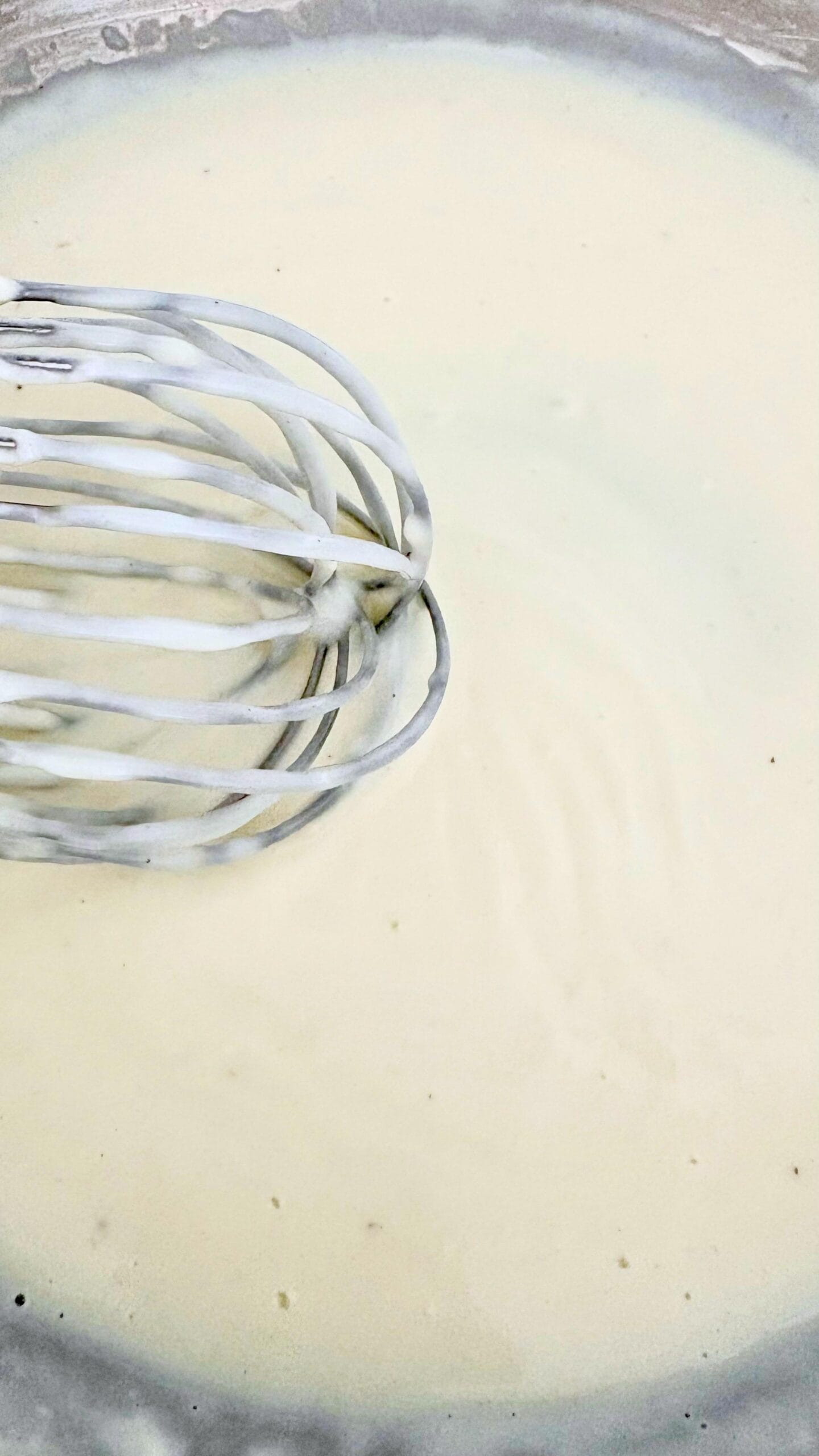
Béchamel is something that sounded more intimidating to cook than it actually was.
After following Marcella’s advice to whisk constantly, take my time adding the milk, and keep the heat on low, I found the sauce thickened quickly and with very little stress.
I’m glad to have this for baked recipes and others where béchamel will continue to pop up. One technique I’ve especially liked is dropping spoonfuls of béchamel throughout a dish rather than spreading it into an even layer. It creates little pockets of creaminess that have added an extra dimension to some of the baked dishes I’ve tried and is worth experimenting with yourself.
If you liked this recipe, you might also like:
- Marcella Hazan’s Three Ingredient Tomato Sauce
- Baked Rigatoni and Bolognese Meat Sauce
- Marcella Hazan’s Bolognese Meat Sauce
If you want a simple reference for choosing wine, download the Italian Wine Pairing Guide to keep on your phone or bring to the store.
Next up in Cooking the Classics: Baked Rigatoni with Bolognese and Béchamel Sauce
About Stephanie
I’m cooking through classic cookbooks one recipe at a time, sharing what works, what surprises me, and what I learn along the way. Every recipe is cooked and tested in my home kitchen, with a wine pairing to enjoy alongside it.