Italian Cheese Guide
Italian cheeses appear in some of the most recognizable Italian dishes, from pasta and risotto to baked recipes and simple antipasti.
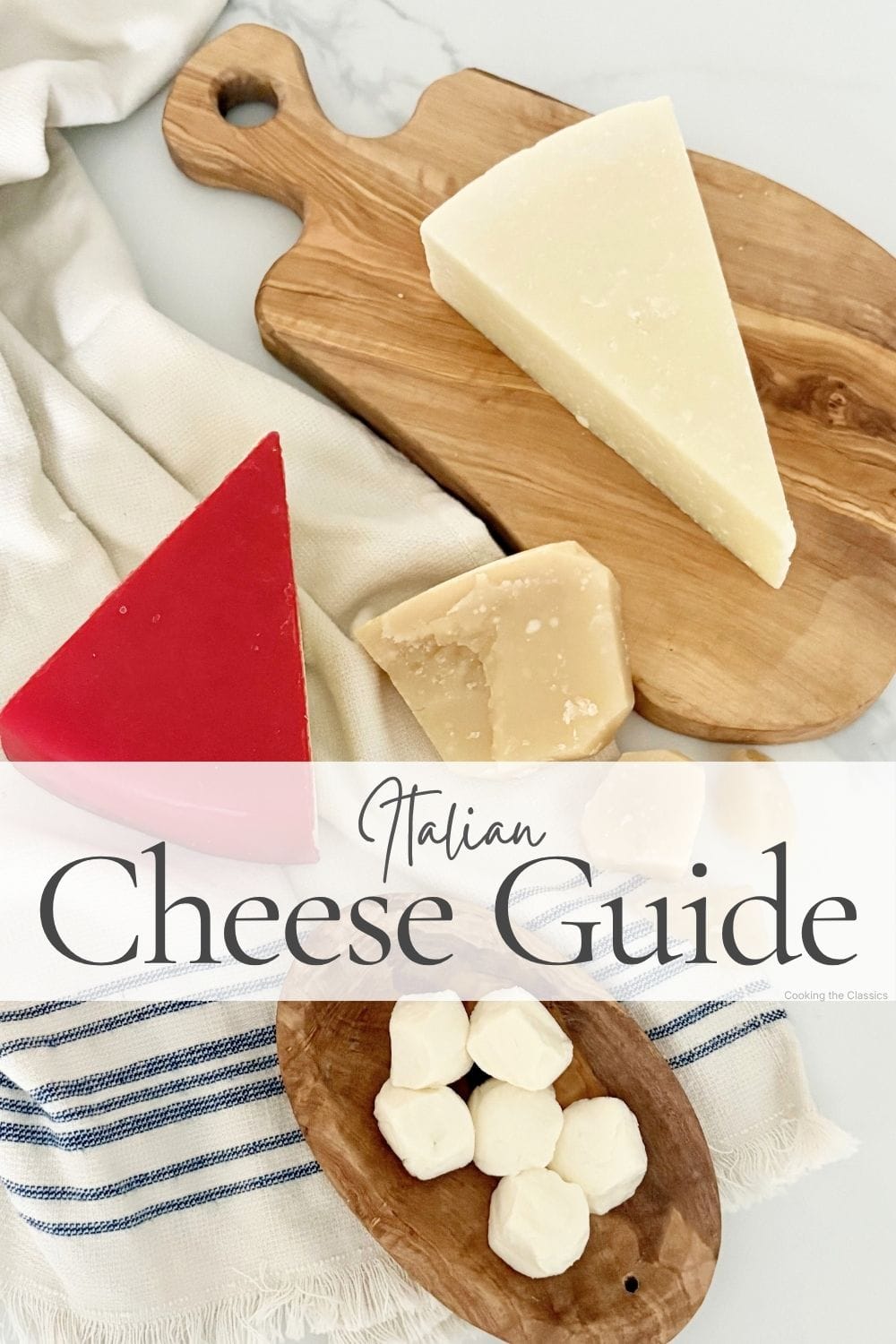
Italian recipes often rely on a small group of cheeses, each with a specific role in the finished dish.
Some are grated over pasta or stirred into risotto. Others melt into baked dishes or are served fresh alongside tomatoes, bread, and olive oil.
Learning a handful of common Italian cheeses makes it easier to understand traditional recipes and stock a kitchen that is ready for everyday cooking.
Cooking through Italian recipes?
Get the 3-page Italian Wine Pairing Guide with what to pour with tomato sauces, chicken, and more.
Understanding Italian Cheeses
Italian cheeses generally fall into two broad categories: fresh cheeses and aged cheeses.
Fresh cheeses are softer and higher in moisture. They are often used in salads, baked dishes, and recipes where texture plays an important role.
Aged cheeses are firmer and more concentrated in flavor. These are the cheeses most commonly grated over pasta, stirred into risotto, or used to finish a dish.
Most classic Italian recipes rely on a relatively small group of cheeses, making them a practical place to start.
Common Italian Cheeses to Know
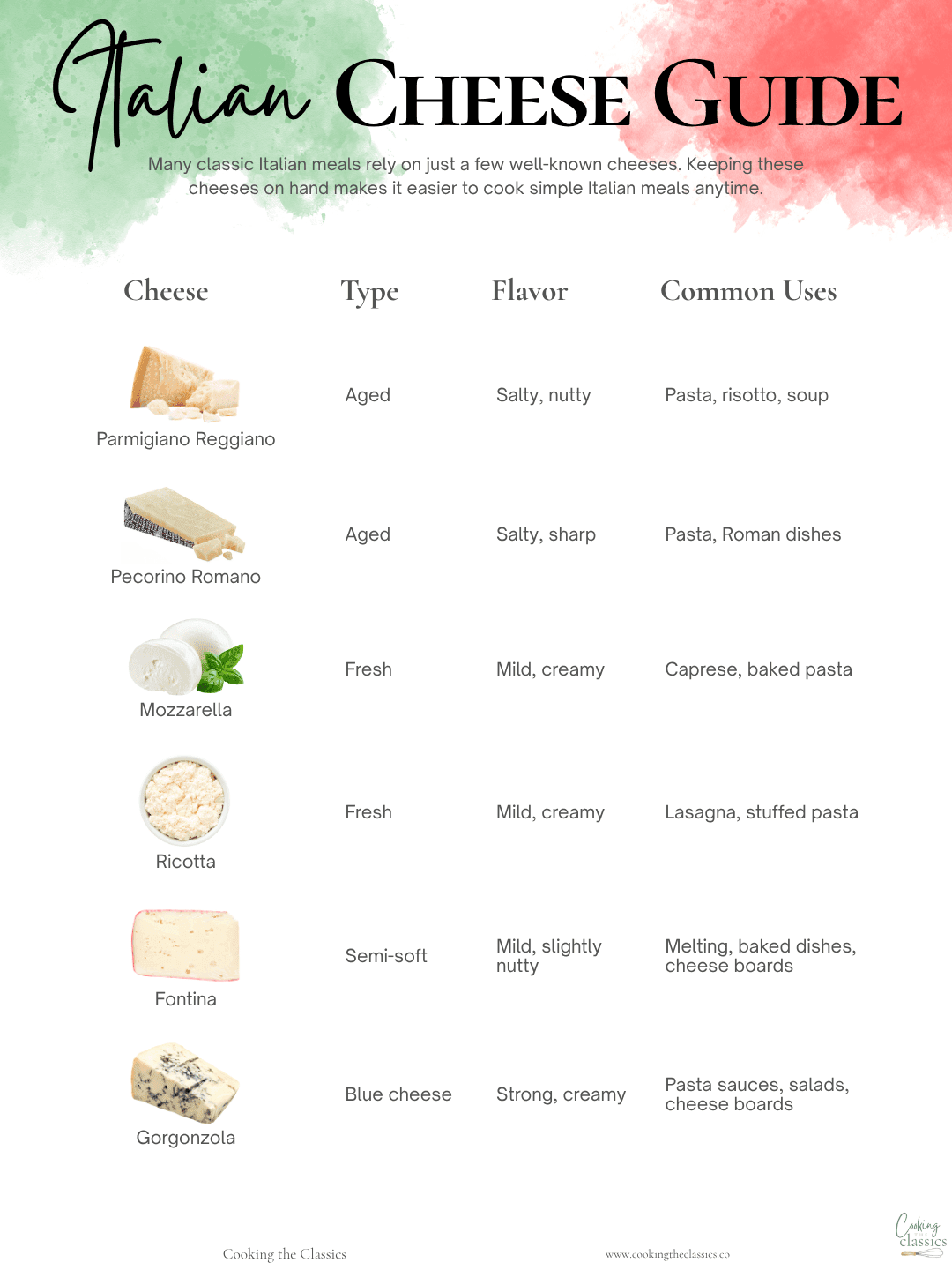
Italy produces hundreds of regional cheeses, but a small group appears repeatedly in classic recipes. These are the cheeses you’re most likely to encounter when cooking from traditional Italian cookbooks.
Parmigiano Reggiano
Aged, firm, and deeply savory. This is one of the most important cheeses in Italian cooking. It is used for grating over pasta, soups, and risotto, and also served in small pieces with bread or fruit.
Pecorino Romano
Aged sheep’s milk cheese with a sharper, saltier flavor than Parmigiano Reggiano. Often used in pasta dishes like cacio e pepe and amatriciana.
Mozzarella
A fresh, soft cheese with a mild flavor. Used in salads, baked dishes, and appetizers. Fresh mozzarella is best for recipes like caprese or bruschetta.
Ricotta
Soft and creamy, with a mild flavor. Used in both savory and sweet dishes, from lasagna and stuffed pasta to desserts.
Fontina
A semi-soft cheese that melts well. Often used in baked dishes or to add richness to vegetables and pasta.
Gorgonzola
A blue cheese with a stronger flavor. Used in small amounts in sauces, pasta, or cheese boards.
How Italian Cheeses Are Used
Italian cheeses are often enjoyed on their own, not just as ingredients in recipes.
Many are served with simple accompaniments such as bread, fruit, honey, olives, nuts, and cured meats. The goal is usually to pair foods that complement the cheese rather than compete with it.
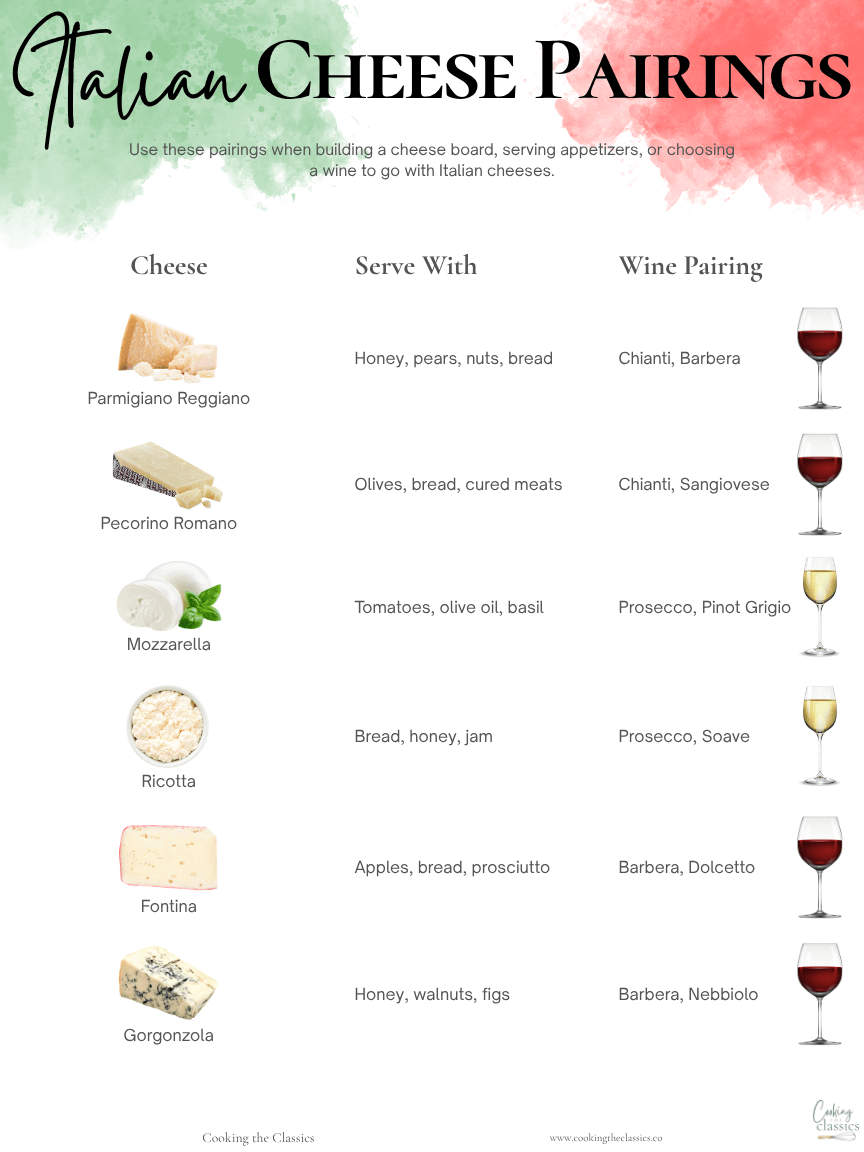
Parmigiano Reggiano pairs naturally with honey, pears, nuts, and bread, while Pecorino Romano is often served alongside olives, cured meats, and crusty bread. Fresh mozzarella is commonly paired with tomatoes, basil, and olive oil, and ricotta works well with bread, honey, or fruit preserves.
Fontina is frequently served with apples, bread, and prosciutto, while Gorgonzola’s stronger flavor pairs well with honey, walnuts, and figs.
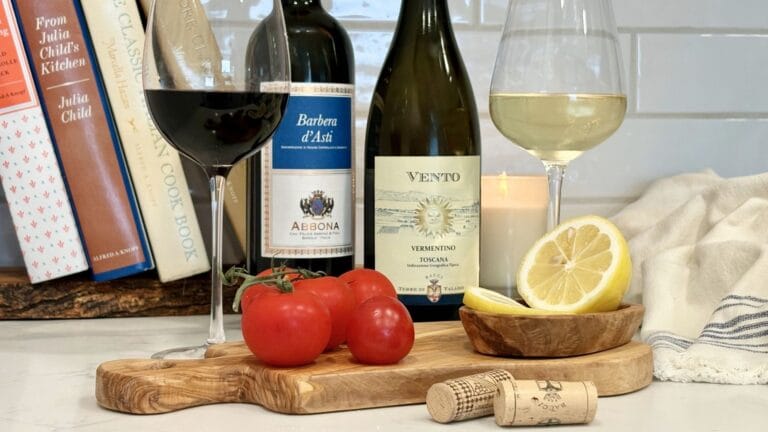
Wine is also a traditional accompaniment. Depending on the cheese, pairings may range from crisp whites such as Pinot Grigio and Soave to reds like Chianti, Barbera, Sangiovese, and Nebbiolo.
These combinations provide a simple starting point when building an appetizer, cheese board, or light meal around Italian cheeses.
Italian Cheeses I Like To Keep On Hand
You do not need a large selection of cheese to cook Italian food regularly.
These are the cheeses I reach for most often because they cover a wide range of classic Italian recipes.
I usually keep:
- Parmigiano Reggiano
- Pecorino Romano
- Fresh mozzarella
- Ricotta
With these on hand, you can cook pasta, baked dishes, appetizers, and simple meals with very little additional shopping.
Meals You Can Make With These Cheeses
With just a few Italian cheeses, you can make many classic Italian dishes, including:
- Fettuccine with Butter and Parmesan
- Baked Rigatoni with Bolognese
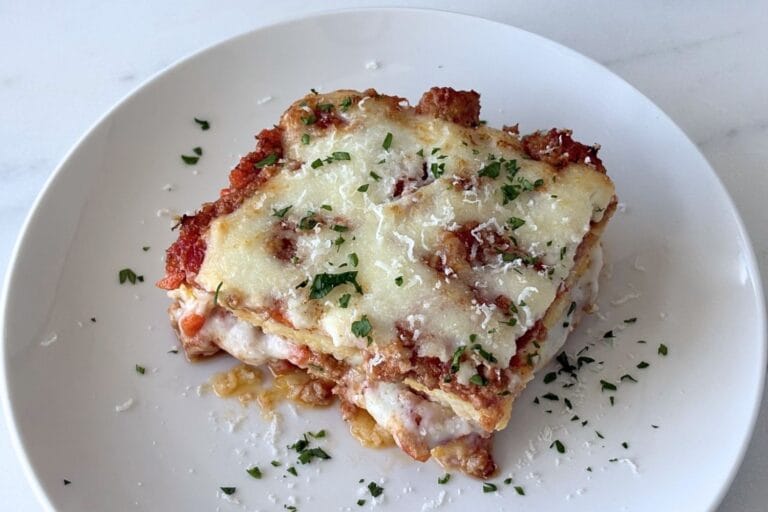
- Lasagna
- Asparagus and Prosciutto Bundles
- Cheese Boards (with bread and cured meats)
- Risotto with Parmesan
With a few well-chosen cheeses in the refrigerator, many classic Italian dishes are already within reach.
Why Certain Cheeses Appear Again and Again
Traditional Italian recipes often call for a specific cheese, and there is usually a reason for it.
Parmigiano Reggiano adds savory depth. Pecorino Romano contributes a sharper, saltier flavor. Mozzarella brings moisture and meltability, while ricotta adds richness and texture.
Although these cheeses can sometimes be substituted, they are not completely interchangeable. Each contributes something different to the finished dish.
Understanding the role of a few common cheeses helps explain why certain ingredients appear repeatedly in classic Italian cooking.
You don’t need to know every regional cheese made in Italy.
A handful of familiar cheeses will cover most classic recipes and provide a foundation for everything from pasta and risotto to appetizers and baked dishes.You do not need to know every Italian cheese to cook well.