How to Serve Italian Wine: Temperature, Glassware, and Decanting
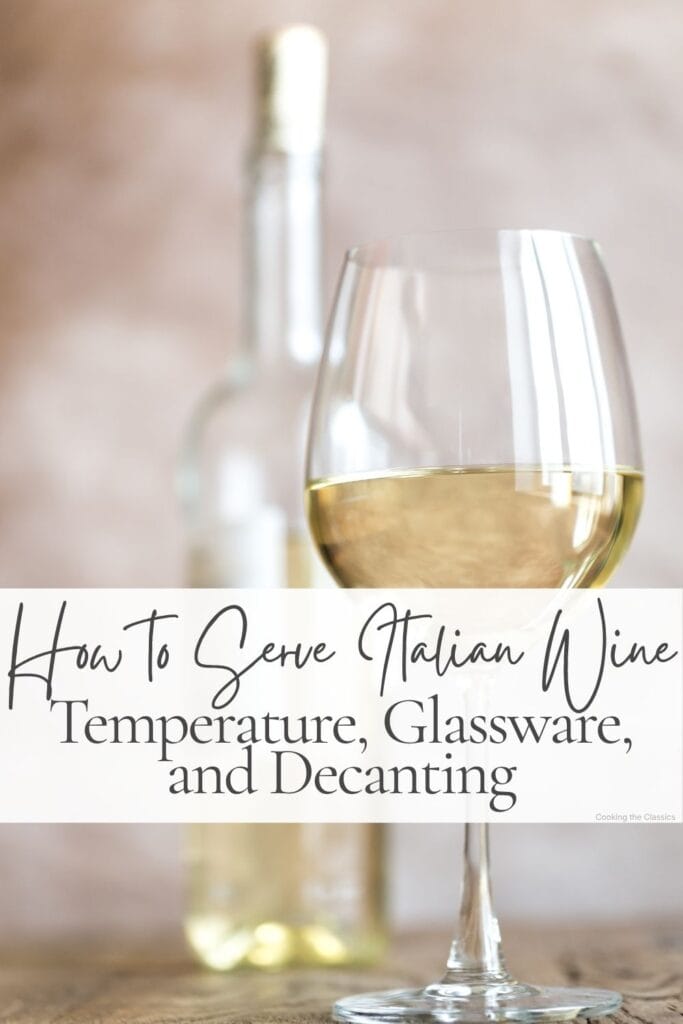
Choosing a bottle of Italian wine is only part of the process. Once you bring it home, there are still a few questions to answer.
Does it go in the refrigerator? Should you open it before dinner? Does the shape of the wine glass really matter? And when does a wine actually need to be decanted?
I’ve had all of these questions while learning more about Italian wine. Some of the advice surrounding wine can make serving it seem much more complicated than it needs to be. There are dozens of styles of wine glasses, very specific serving temperatures, and plenty of rules about letting wine breathe.
Here’s what I’ve learned about serving temperature, choosing a glass, opening a bottle ahead of time, and deciding whether it needs to be decanted.
Want an easier way to choose Italian wine?
Get my free 3-page Italian Wine Pairing Guide with straightforward suggestions for what to pour with pasta, tomato sauces, chicken, and more.
What Temperature Should You Serve Wine?
Serving temperature matters because it changes how a wine smells and tastes. A wine served too cold can seem muted, while one served too warm can taste heavy and make the alcohol more noticeable.
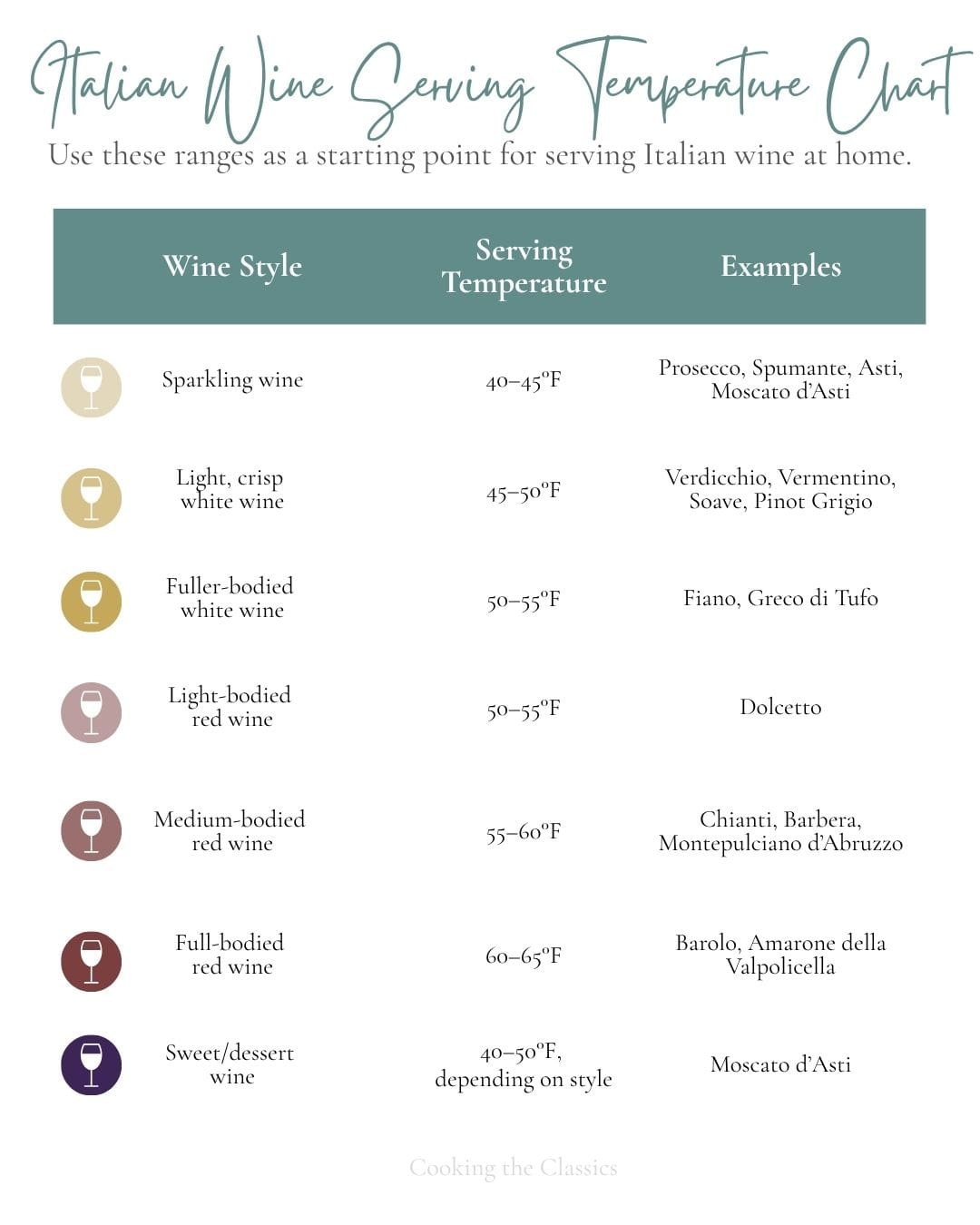
One of the more useful things I learned was that “room temperature” isn’t particularly helpful advice for red wine. A red wine sitting in a 72°F kitchen is warmer than its ideal serving temperature.
Use this chart as a helpful starting point. These don’t need to be treated as exact targets. You don’t need to take the temperature of every bottle before pouring a glass.
The ranges are more useful for understanding that white wine doesn’t necessarily need to be ice cold and red wine doesn’t necessarily belong on the counter all afternoon.
How Long Should You Chill Wine?
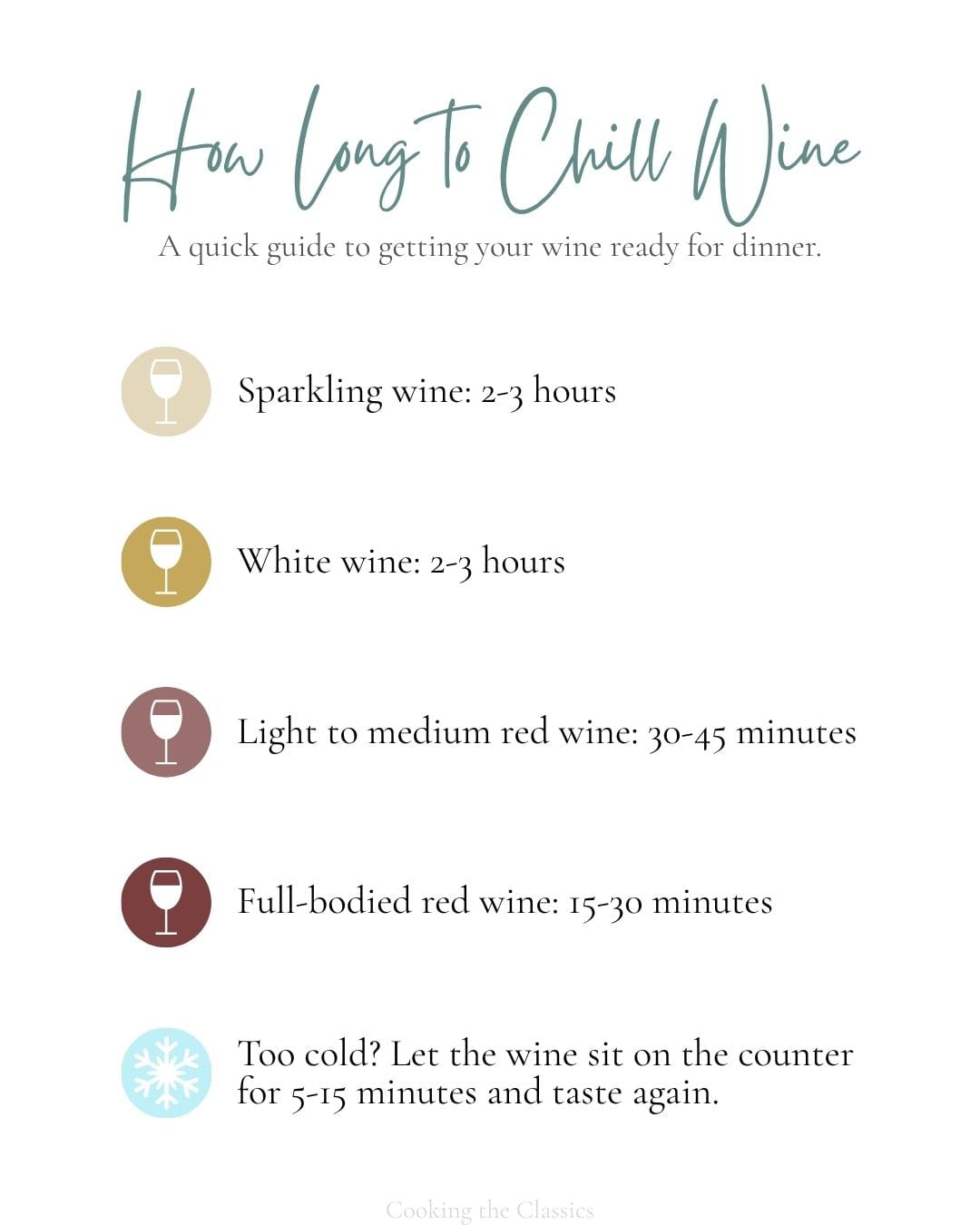
For a bottle starting around room temperature, a few hours in the refrigerator is generally enough to chill a white or sparkling wine. A red that only needs a slight chill may need considerably less time.
If a bottle gets colder than you intended, there isn’t much to fix. Pour it and give it some time in the glass. Wine warms surprisingly quickly once it’s out of the refrigerator.
The same principle works in the other direction. If a red wine has been sitting in a warm kitchen, putting it in the refrigerator for a short time before dinner can bring it closer to a better serving temperature.
Do Wine Glasses Really Matter?
Yes, but probably not enough to justify filling an entire cabinet with them.
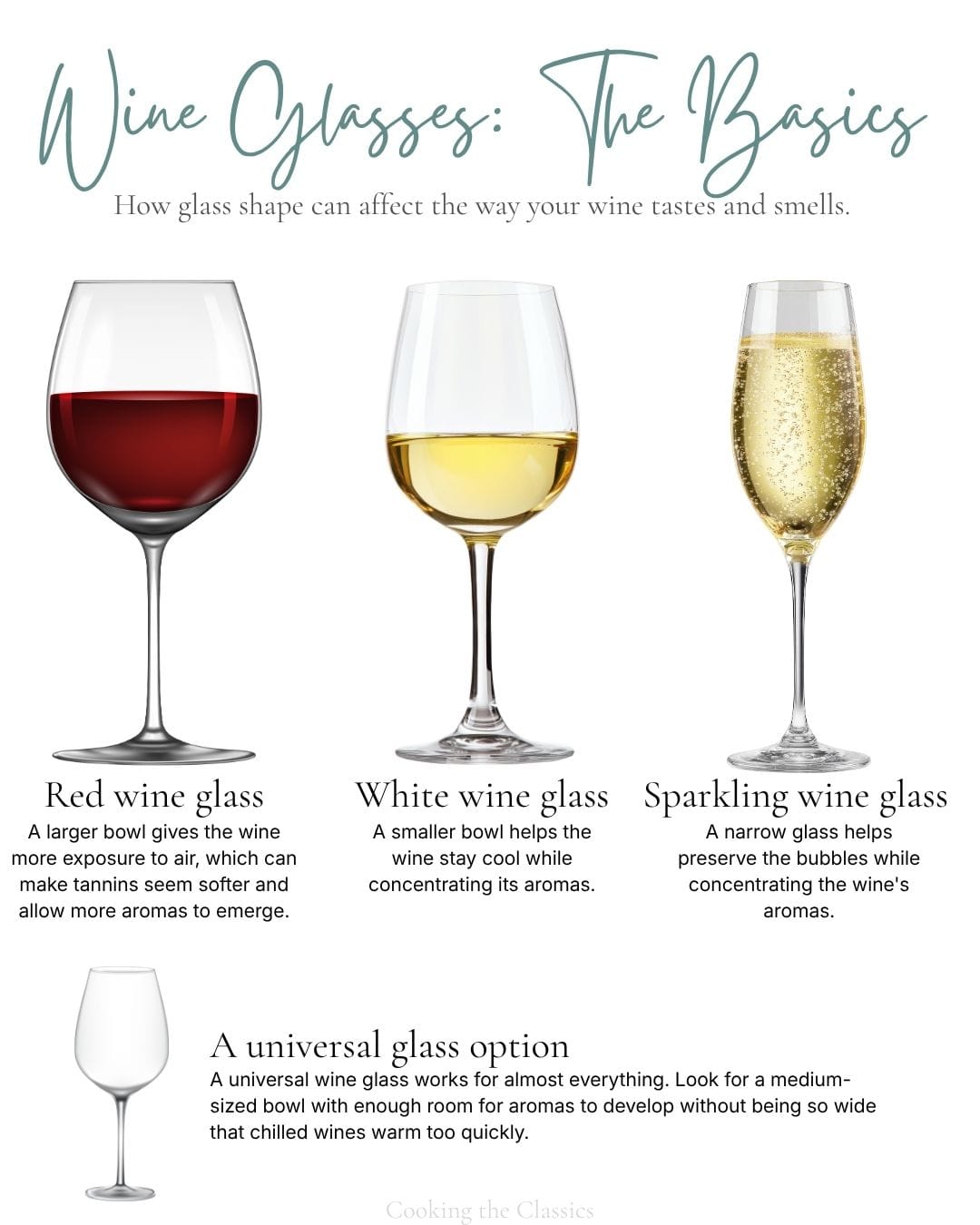
Glass shape can affect how a wine smells and tastes. A larger bowl gives the wine more exposure to air, while a smaller bowl can help a chilled wine stay cool and concentrate its aromas.
There are glasses designed for specific grapes and regions, but you don’t need a different glass for every wine you drink. For most people, red, white and sparkling wine glasses cover nearly everything.
What If You Only Want One Type of Wine Glass?
Buy a good universal wine glass. Look for a medium-sized bowl with enough room to swirl the wine, but not so large that it feels awkward for white or sparkling wines.
If you don’t want to store several sets of glasses, a universal glass is a practical choice for almost anything you’re likely to serve with dinner.
Stemmed or Stemless?
Either works. I prefer stemmed glasses because you can hold the stem without warming the wine with your hand. That matters most with chilled wines.
Should You Open a Bottle of Wine Well Before Dinner?
Usually, there’s no need. Simply removing the cork exposes only a small amount of wine to air, so opening a bottle an hour or two before dinner doesn’t necessarily accomplish much.
Instead, open the bottle and pour a glass. If you like how it smells and tastes, start drinking it. If it seems very tannic or you’re not getting much aroma or flavor, decanting will expose much more of the wine to air.
When Should You Decant Wine?
There are two main reasons to decant wine: to give it more exposure to air or to separate an older wine from sediment.
A red wine that tastes especially tannic when first opened may benefit from 30 minutes to a couple of hours in a decanter. A young Barolo, for example, may change noticeably after some time exposed to air. Lighter, fruitier reds often need little or no decanting.
Older wines are different. Sediment can collect in the bottle as wine ages, so decanting may be used to carefully separate the clear wine from that sediment. Because older wines can be more fragile, they are often decanted shortly before serving rather than left exposed to air for a long time.
Not sure? Taste it first. If the wine smells good and you like how it tastes, drink it. You don’t need to decant a bottle simply because it’s red.
Which Italian Wines Might Benefit From Decanting?
This depends on the individual bottle, its age and how it was made, but the style of wine can give you a starting point.
Nebbiolo, Barolo and Barbaresco
Young examples may benefit from aeration because of their tannin and structure. Older bottles may need careful decanting because of sediment.
Chianti Classico and other structured Sangiovese wines
Some younger bottles can benefit from a little air, although there’s no reason to automatically decant every Chianti.
Barbera
Usually doesn’t require lengthy decanting. Pouring it into a glass may provide all the air it needs.
Dolcetto
Generally another wine that doesn’t require much preparation before drinking.
Verdicchio, Vermentino and Soave
There is usually no need to decant these everyday Italian whites. Serve them at the appropriate temperature and let them open in the glass.
Prosecco
Don’t decant sparkling wine. You want to keep the carbonation in the wine rather than encourage it to escape.
What Should You Do With Leftover Wine?
Once a bottle is open, oxygen that may initially help a wine eventually starts working against it.
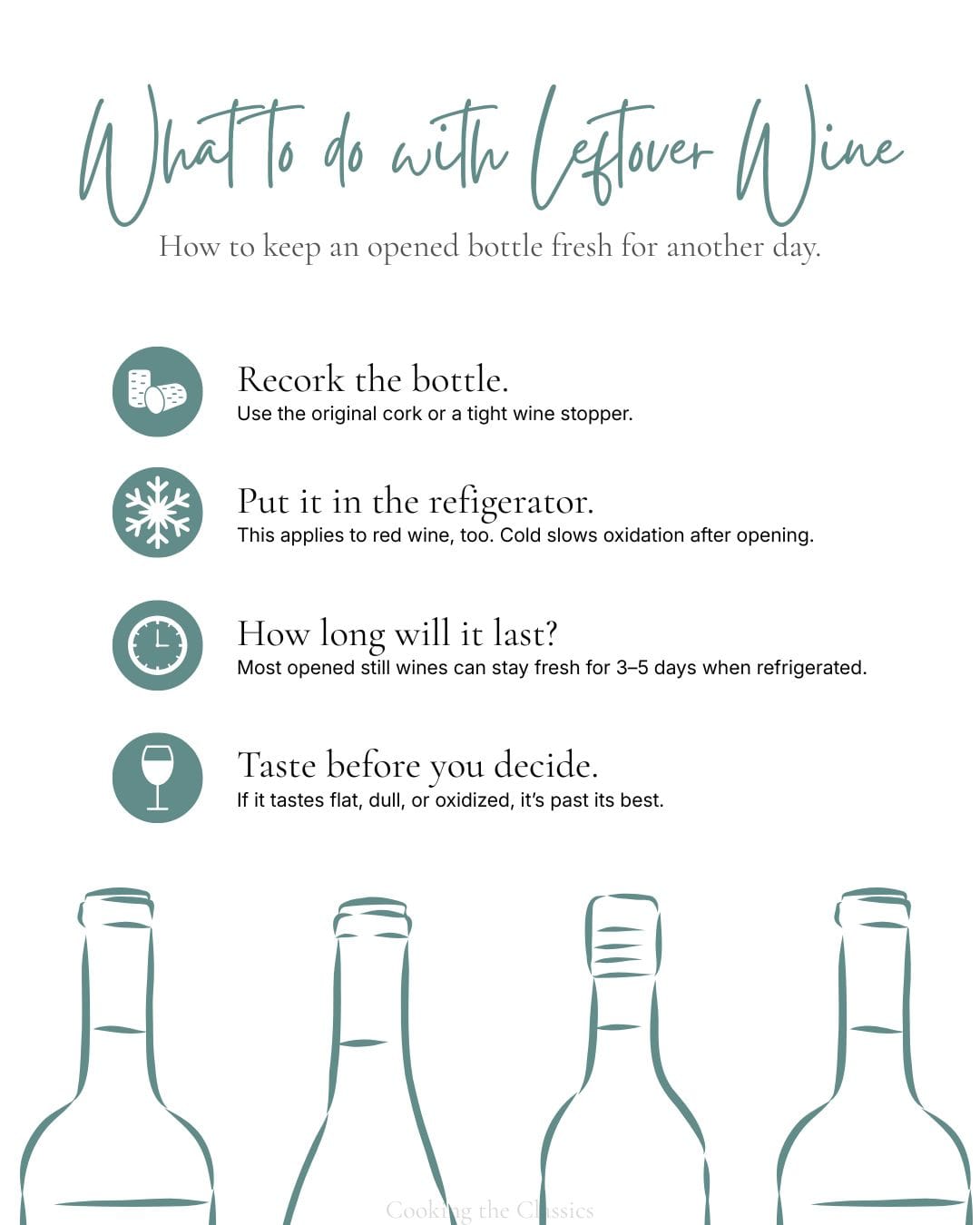
The easiest thing to do is recork the bottle and put it in the refrigerator. That applies to red wine, too.
Cold temperatures slow the changes taking place in an opened bottle. When you’re ready to drink the red again, take it out of the refrigerator ahead of time and allow it to warm toward its serving temperature.
As a general rule, many still wines remain enjoyable for 3-5 days after opening, although delicate older wines may fade much faster. Sparkling wine loses carbonation more quickly and benefits from a proper sparkling-wine stopper.
Taste is ultimately a better test than the calendar. If the wine’s fruit and aromas have faded and it tastes flat or noticeably oxidized, it’s past its best.
A Quick Guide Before Dinner
If you’re trying to remember all of this while making dinner, here’s the shorter version.
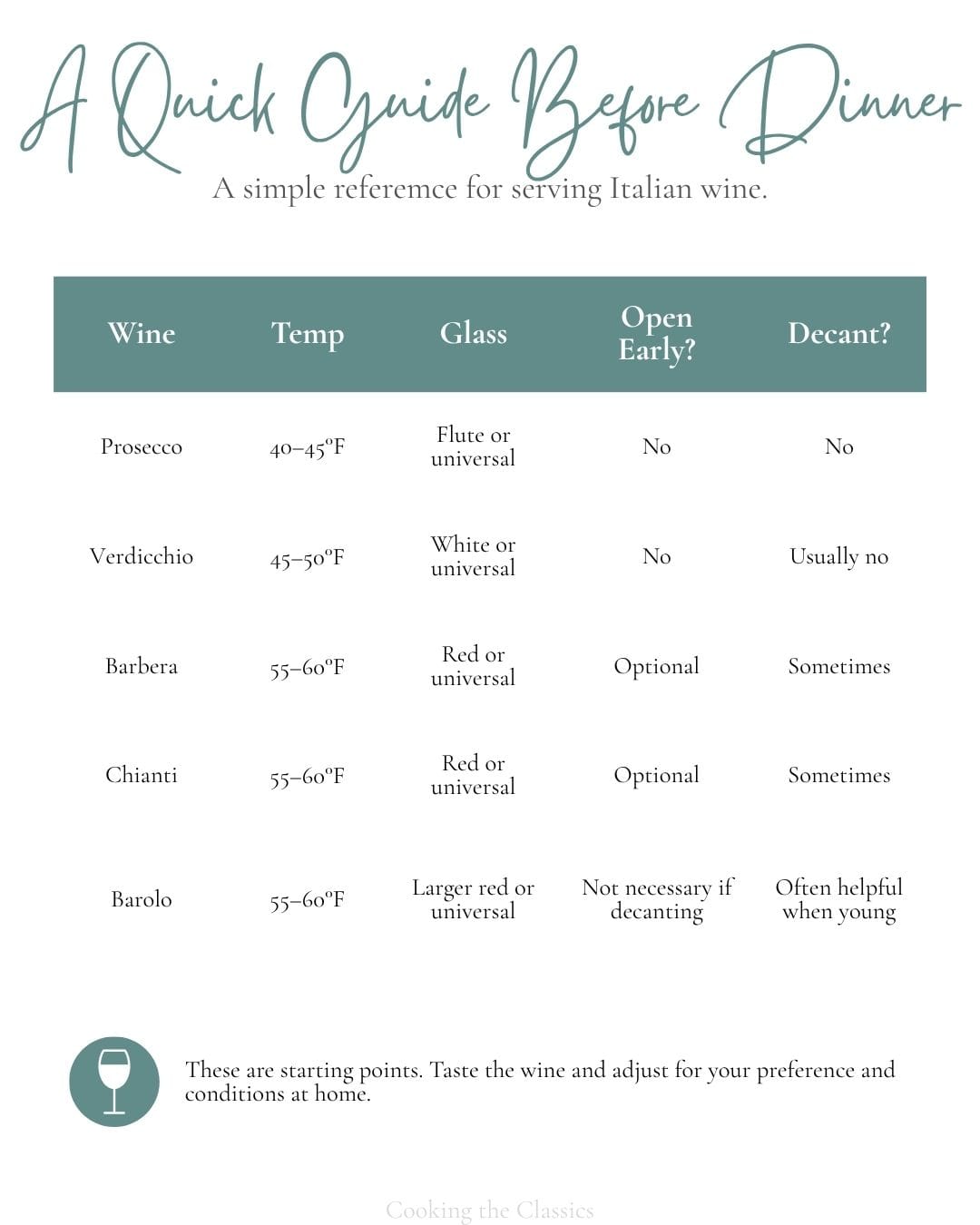
Wine glasses, serving temperatures and decanters can make a difference, but none of them need to turn opening a bottle for dinner into a complicated process.
Chill whites and sparkling wines, and don’t be afraid to cool a red that’s been sitting in a warm room. A few versatile glasses are enough. Taste a wine before deciding it needs an hour in a decanter. Put leftovers in the refrigerator.
The more Italian wine I try, the more useful I find these basic serving habits. I don’t need a different glass for every wine or a decanter on the table every night. Knowing when to chill a bottle, when to give it some air, and when to simply open it and pour is usually enough.