What Are Tannins in Wine?
If you’ve ever had a red wine that made your mouth feel dry or slightly rough, you were probably tasting tannins.
Tannins are one of the main things that shape how a wine feels at the table, especially with food.
They affect texture more than flavor, which is why two red wines can taste equally fruity but feel completely different once you start drinking them with dinner.
Some wines feel smooth and soft right away. Others feel firmer, drier, or more structured. That difference often comes down to tannins.
For anyone cooking through classic Italian dishes, understanding tannins becomes especially useful because they change noticeably depending on what you’re serving alongside them.
What Do Tannins Feel Like?
Tannins create a drying sensation in your mouth, usually along your gums or tongue.
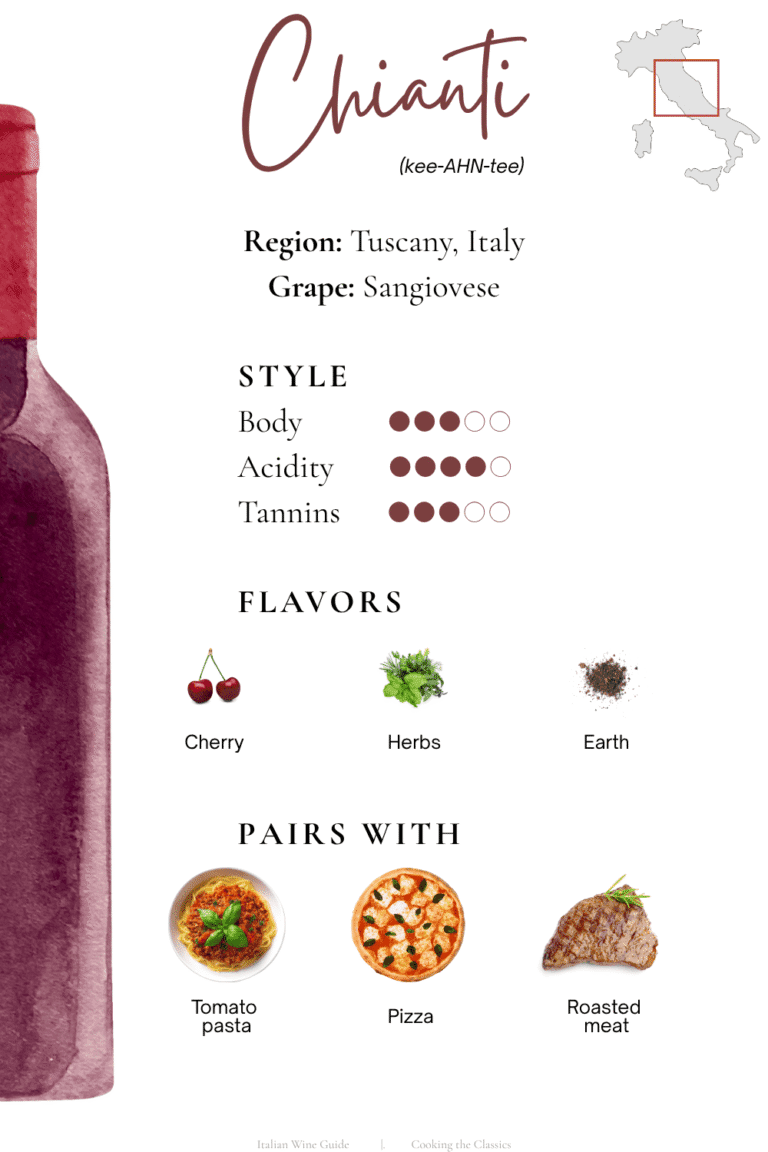
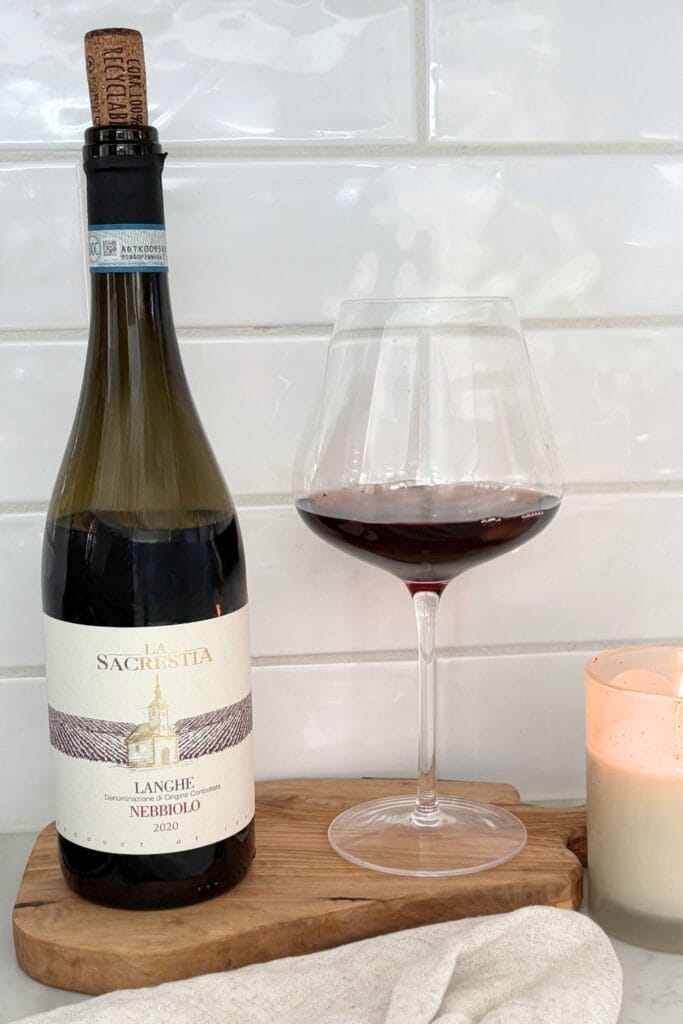
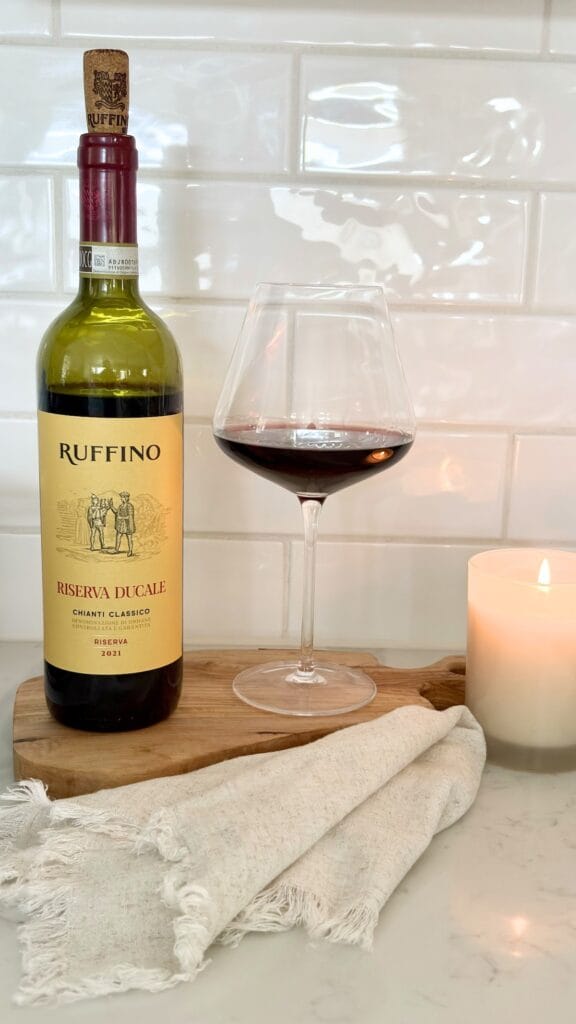
They’re easiest to notice in stronger red wines like Nebbiolo or some Chianti Classicos, where the wine can feel more structured and slightly grippy after a sip.
If you’ve ever:
- drunk strong black tea
- eaten dark chocolate
- tasted walnut skins
you’ve already experienced tannins in another form.
That dry feeling is the closest comparison.
Tannins aren’t necessarily harsh or unpleasant, though. In the right wine, they help create balance and structure, especially with richer foods.
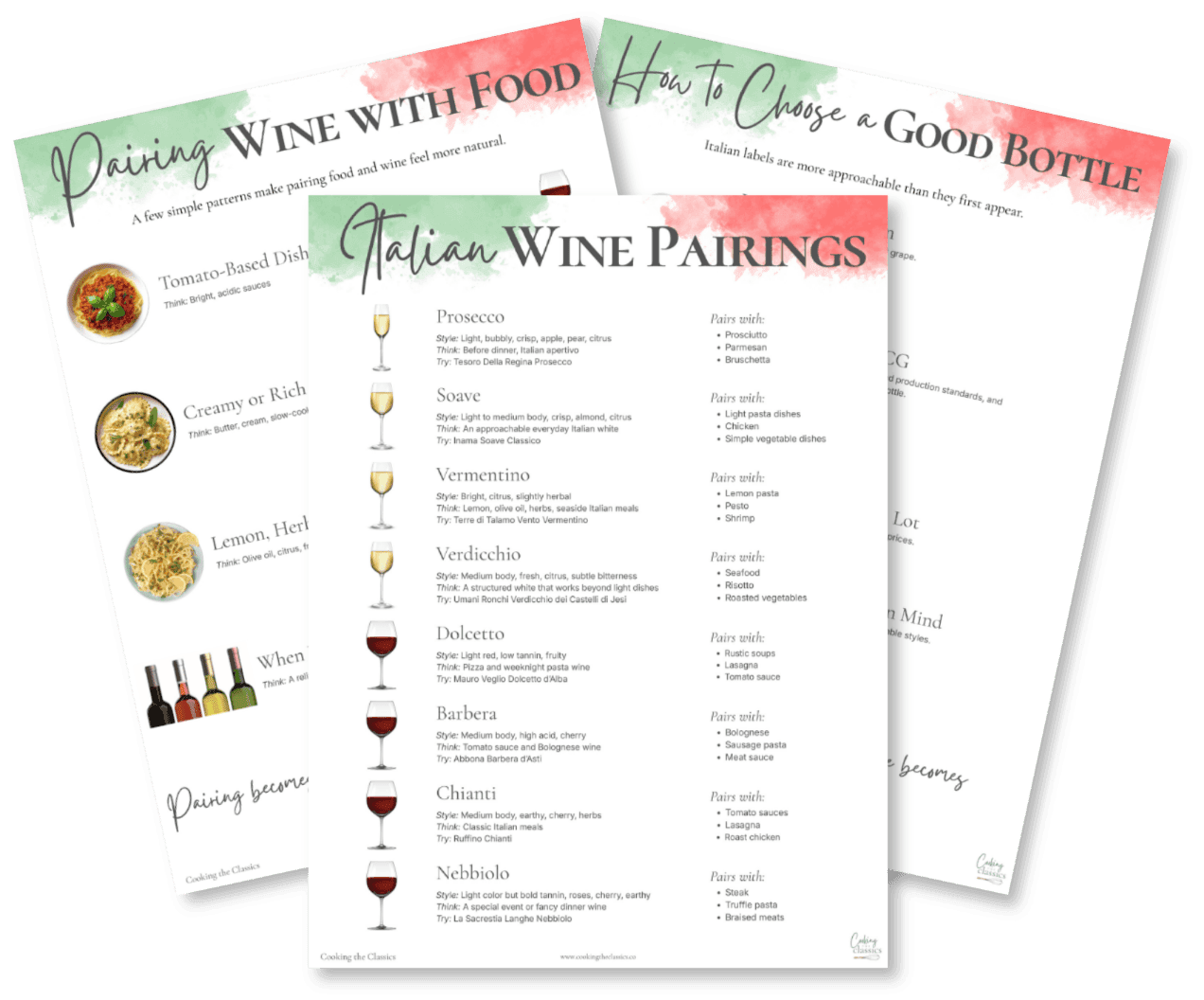
For a closer look at pairing Italian wines with food, choosing bottles confidently, and key label terms to know, download the Italian Wine Pairing Guide to keep on hand while cooking or shopping.
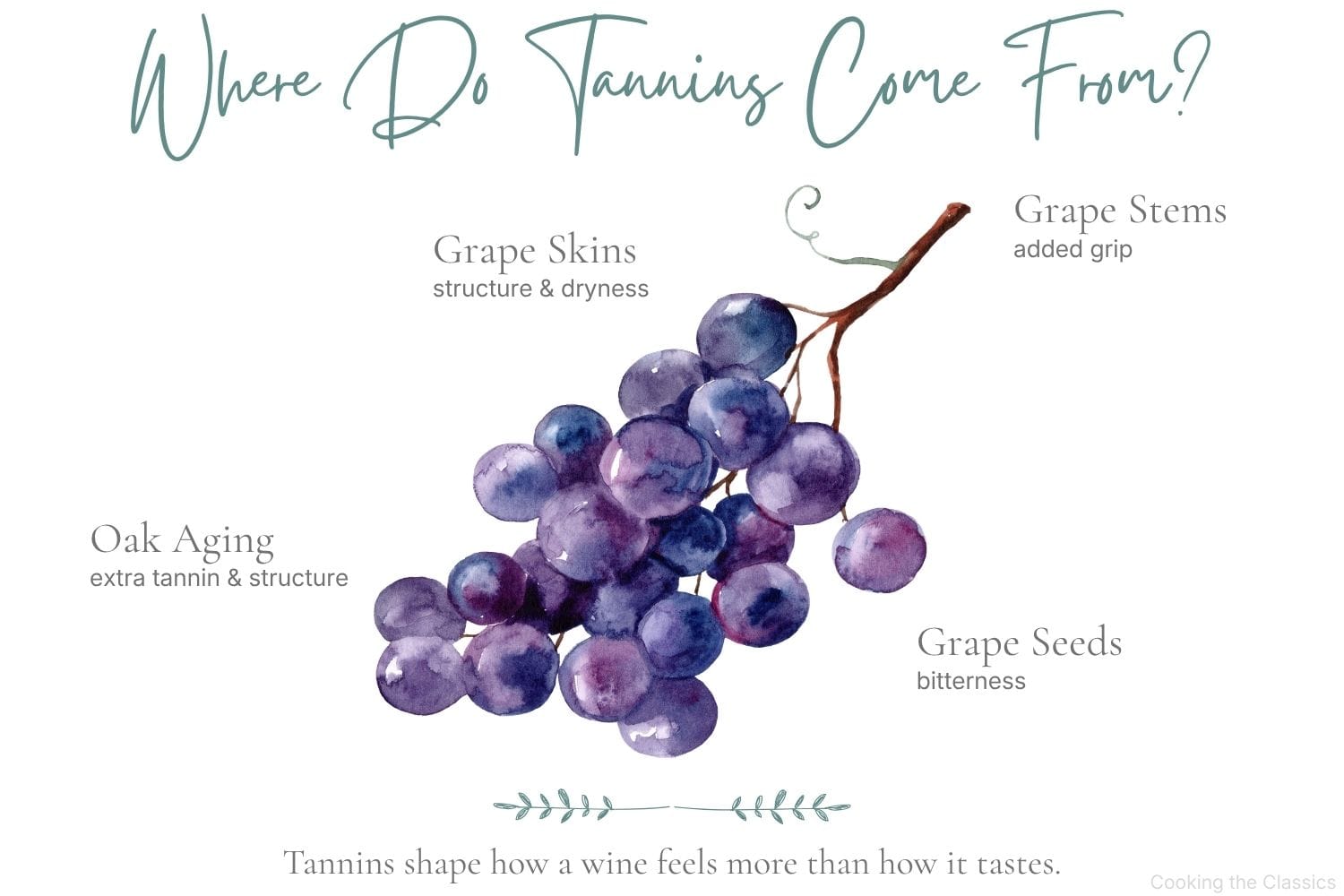
Where Do Tannins Come From?
In wine, tannins mainly come from grape skins, seeds, and stems.
Red wines usually contain more tannins because the juice stays in contact with the skins during fermentation. White wines are generally much lower in tannins because the skins are removed earlier in the process.
Oak aging can also add tannins, which is part of why some wines feel more structured than others.
Why Some Wines Feel More Tannic Than Others
Not all red wines feel equally dry or firm.
Some Italian wines naturally lean higher in tannins, while others stay softer and easier to drink on their own.
Here’s a general comparison:
- Nebbiolo → high tannins
- Chianti (Sangiovese) → medium to medium-high tannins
- Montepulciano d’Abruzzo → medium tannins
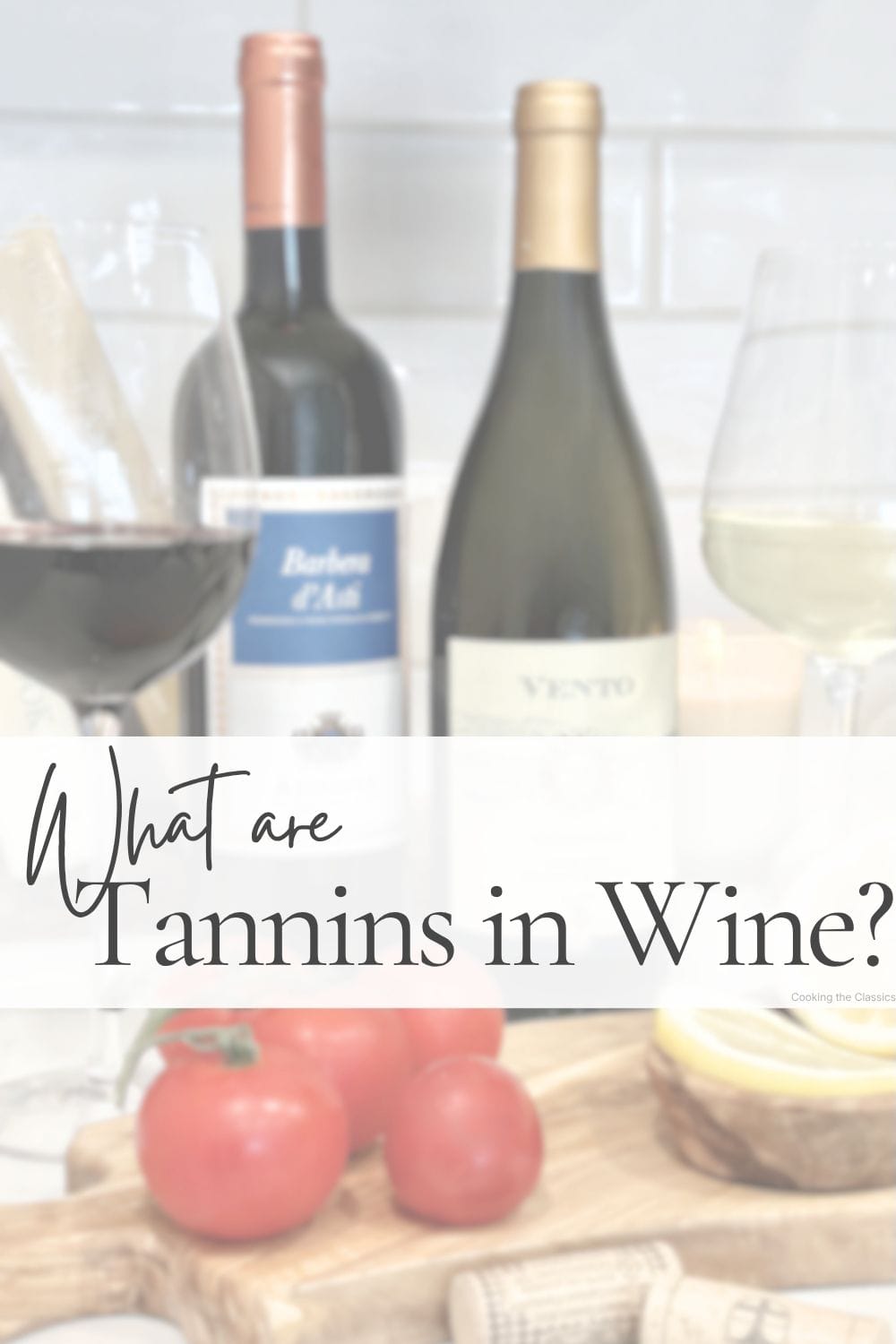
- Barbera → lower tannins, higher acidity
- Dolcetto → softer tannins
This is part of why Barbera often feels easier earlier in a meal, while Nebbiolo usually benefits from richer food beside it.
Why Food Changes Tannins
This is where tannins become much more interesting.
A wine that feels too firm on its own can taste completely balanced once food enters the picture.
Fat, protein, butter, cream, cheese, and slow-cooked meat all soften tannins and make a wine feel rounder and smoother.
That’s one reason classic Italian pairings work so naturally together.
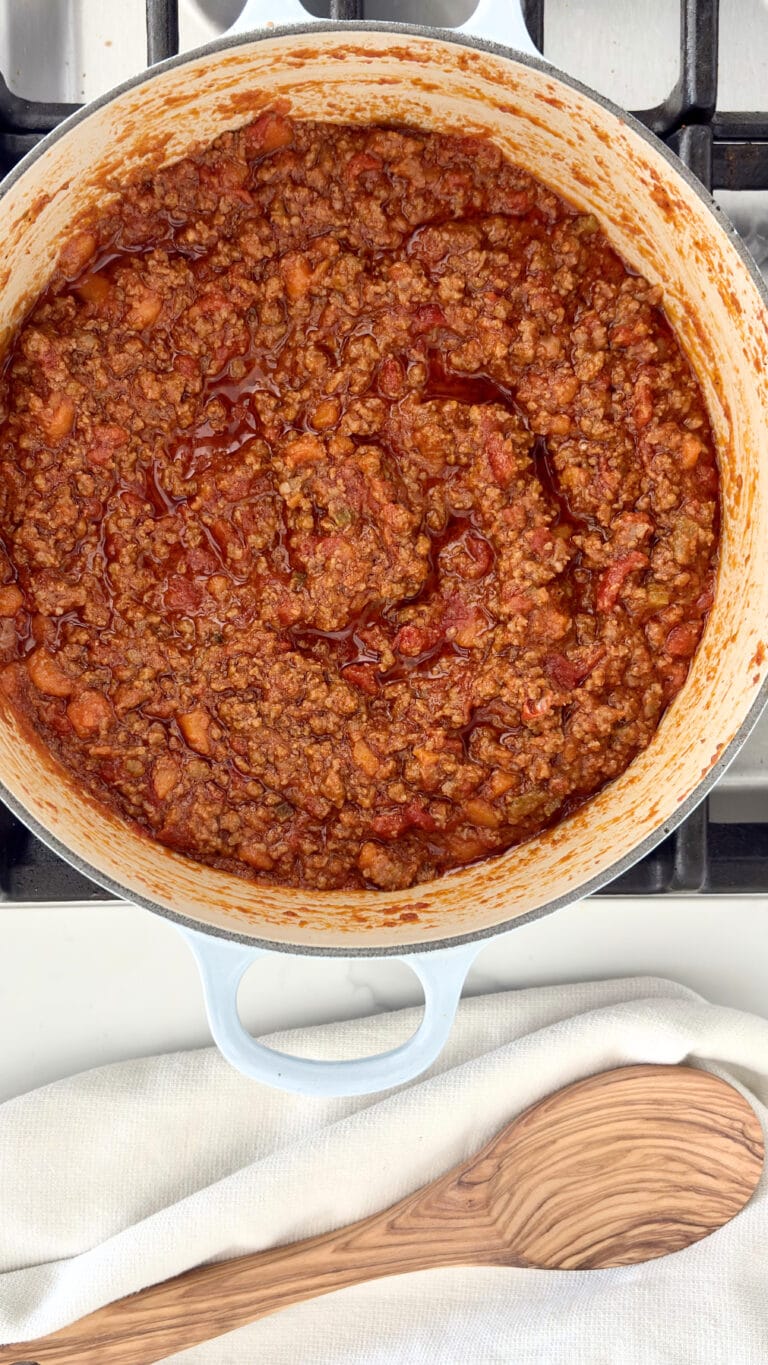
A wine like Nebbiolo can feel aggressive without food, but alongside braised meat, porcini mushrooms, or a long-simmered ragù, it settles into the dish much more comfortably.
The same thing happens with Chianti and tomato sauce. The wine’s structure and acidity work better once they’re paired with olive oil, Parmesan, pasta, and slow-cooked tomatoes.
Tannins and Italian Food Pairing
Understanding tannins makes pairing wine much less complicated because you start noticing how the texture of the food changes the wine itself.
Some pairings where tannins work especially well:
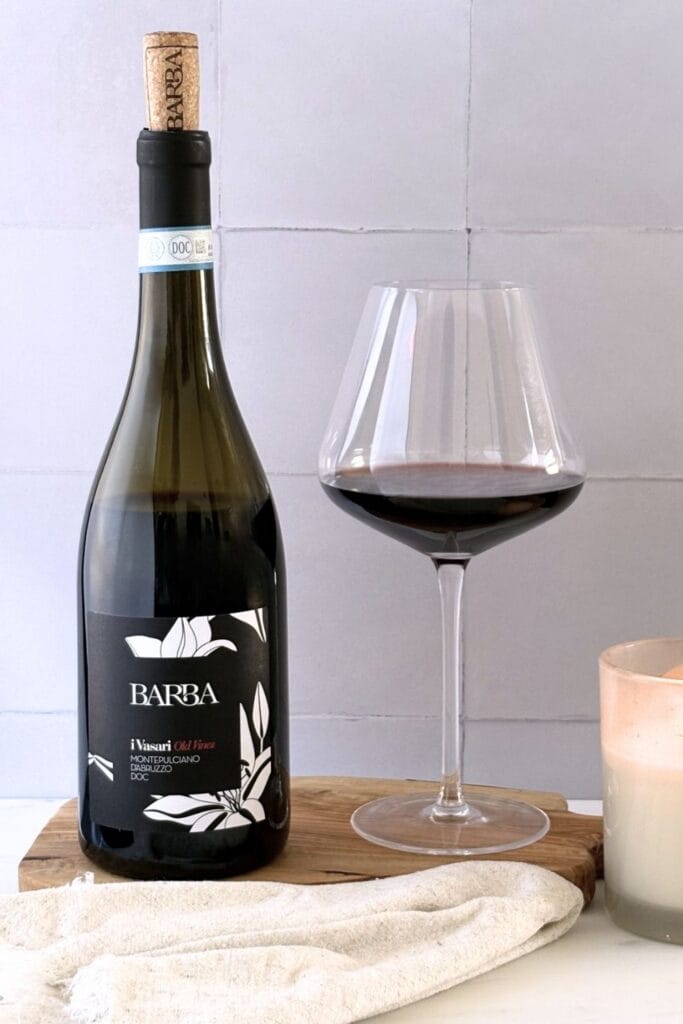
Montepulciano d’Abruzzo
Best with:
- roasted dishes
- meat sauces
- polenta with sausage
- weeknight pasta dishes
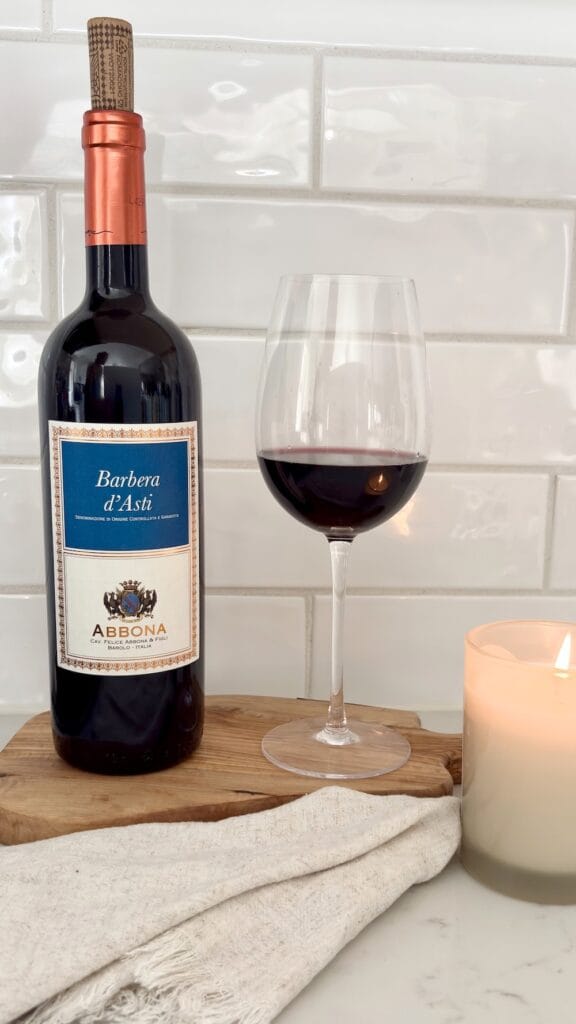
Barbera
Best with:
- tomato-based pasta
- lighter meat sauces
- pizza
- dishes where acidity matters more than structure
How to Tell if You Like Tannic Wines
If you enjoy:
- bold red wines
- slow-cooked dishes
- aged cheeses
- earthy mushroom dishes
- drier wines with more structure
you’ll probably enjoy higher-tannin wines.
If you prefer wines that feel softer, fruitier, or easier to drink casually, you may naturally gravitate toward lower-tannin styles like Dolcetto or Barbera.
Neither is better. They simply work differently with food.
Tannins are one of the main reasons certain wines feel made for certain meals.
Once you start paying attention to how a wine changes alongside pasta, cheese, mushrooms, or slow-cooked sauces, pairing becomes much more intuitive.
Instead of thinking about wine in terms of rules, it starts becoming more about balance, texture, and how the food and wine soften or sharpen each other at the table.