Homemade Mayonnaise: A Simple Step-by-Step Guide
Homemade mayonnaise takes just a few basic ingredients and a few minutes to make.
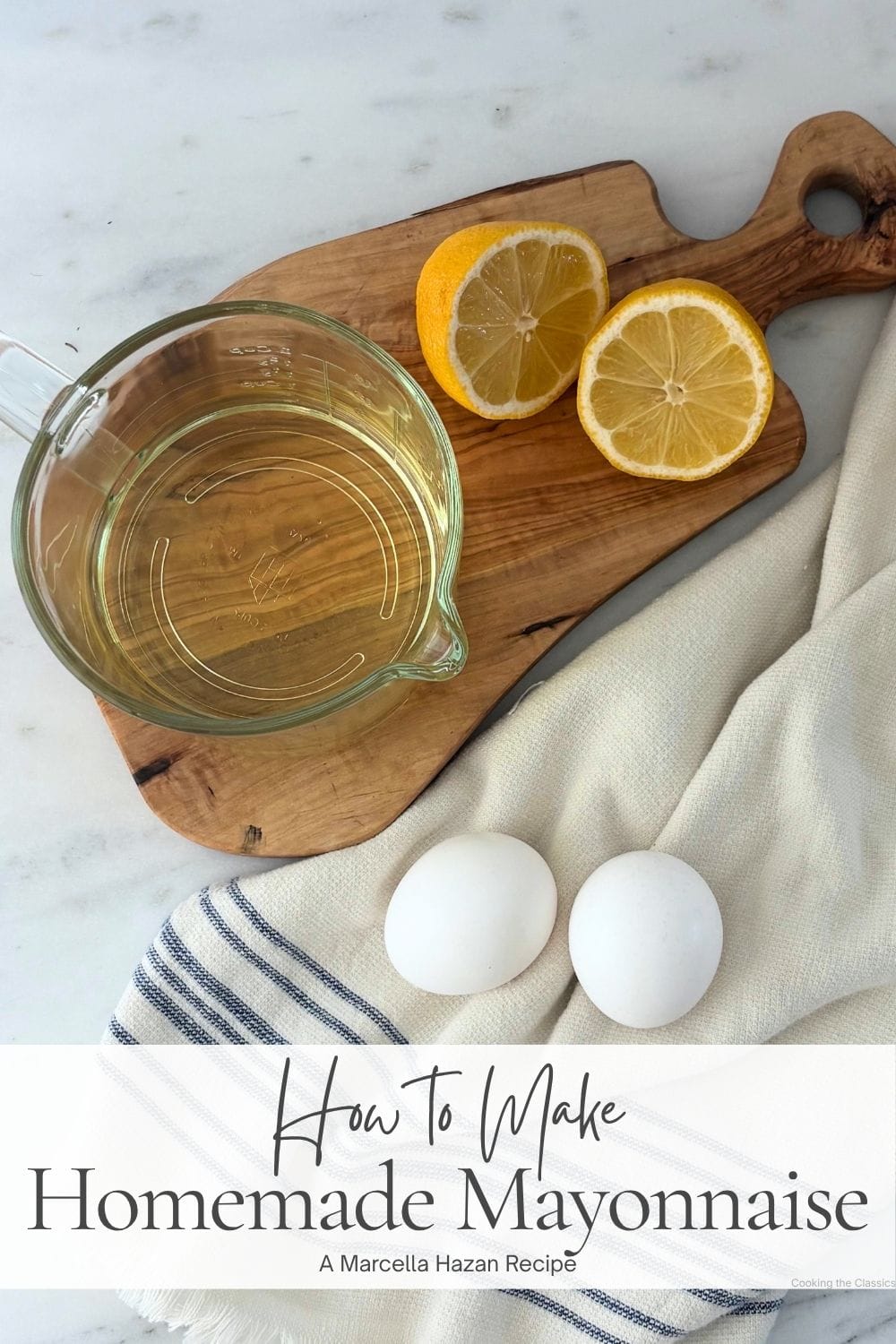
Egg yolks, oil, and lemon juice are blended together to make a thick, creamy mayonnaise.
Using an immersion blender makes homemade mayonnaise surprisingly quick and simple. The ingredients emulsify in seconds, turning into a smooth sauce with very little effort.
Cooking through Italian recipes?
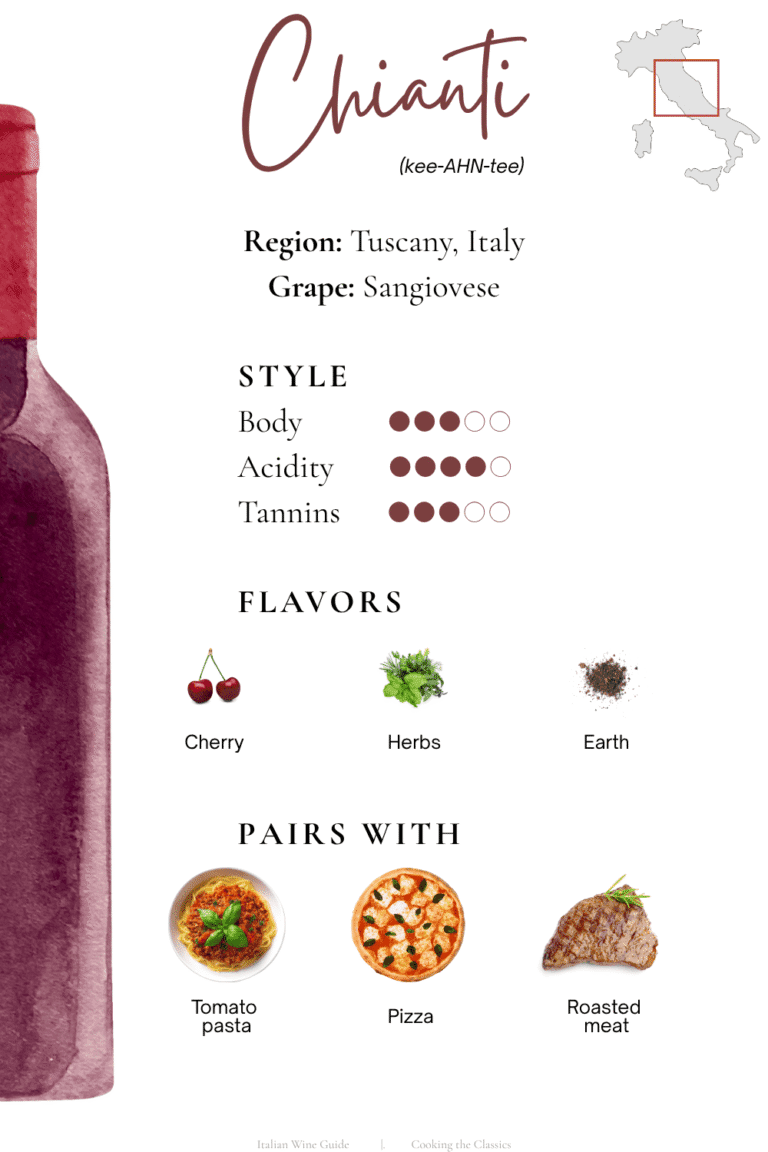
Get the 3-page Italian Wine Pairing Guide with what to pour with tomato sauces, chicken, and more.
Why Homemade Mayonnaise?
I am a lover of all things mayonnaise and always add it to my sandwiches, even dipping my fries in it, so there is always a store-bought jar in our refrigerator.
I was nervous to give this recipe a try because I had heard so many stories of homemade mayonnaise going wrong. But since Marcella calls for homemade mayonnaise in some of her recipes, I decided it was worth learning to make it, just as I had with her homemade broth for risottos, soups, and stews.
Using an immersion blender, I was pleasantly surprised to find that the recipe took only a few minutes and a handful of ingredients. It was so easy to turn on the blender and suddenly have mayonnaise where there had just been egg yolks and oil seconds before.
I added sea salt and liked being able to adjust the tartness with a little more lemon juice. Now my mind is filled with ideas for flavoring it with lemon zest, grated garlic, or fresh herbs. Because it is so simple and makes a manageable amount, I’m seeing us use this more and reach for the store-bought jar much less often.
What You Will Need
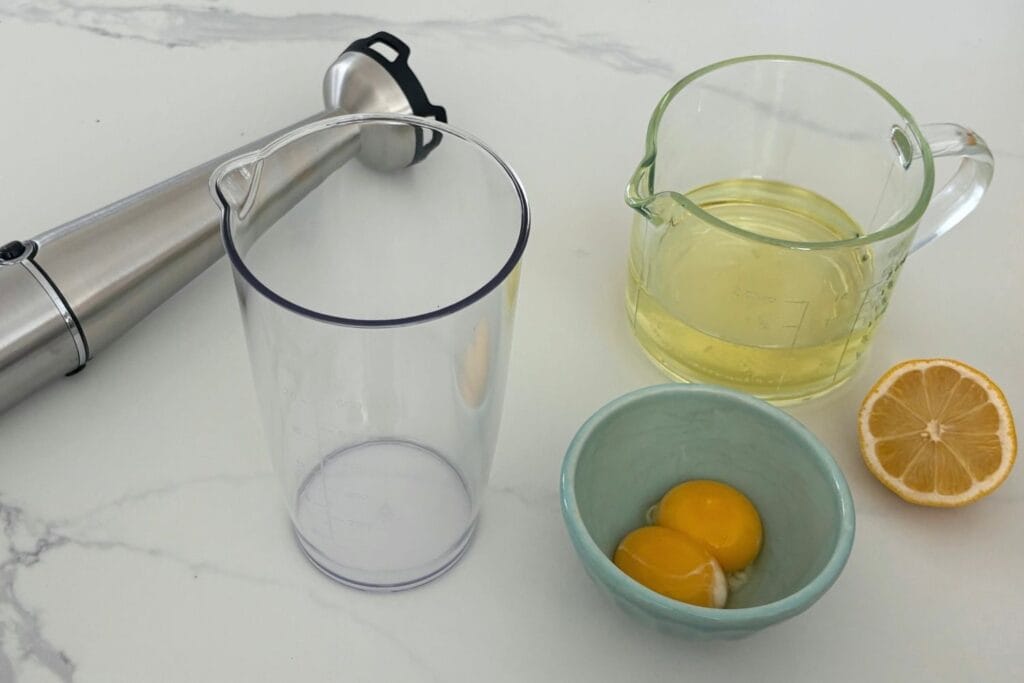
Marcella Hazan’s homemade mayonnaise requires just a few basic ingredients:
- 2 egg yolks, room temperature
- 1 cup vegetable oil
- 2 tablespoons fresh lemon juice
- Salt
Each ingredient has a specific role:
- The egg yolks help the oil and lemon juice emulsify and give the mayonnaise its rich, creamy texture.
- Vegetable oil provides the body of the mayonnaise while keeping the flavor mild and neutral.
- Lemon juice adds acidity and keeps the mayonnaise from tasting too heavy.
- Salt brings out the flavor of the other ingredients.
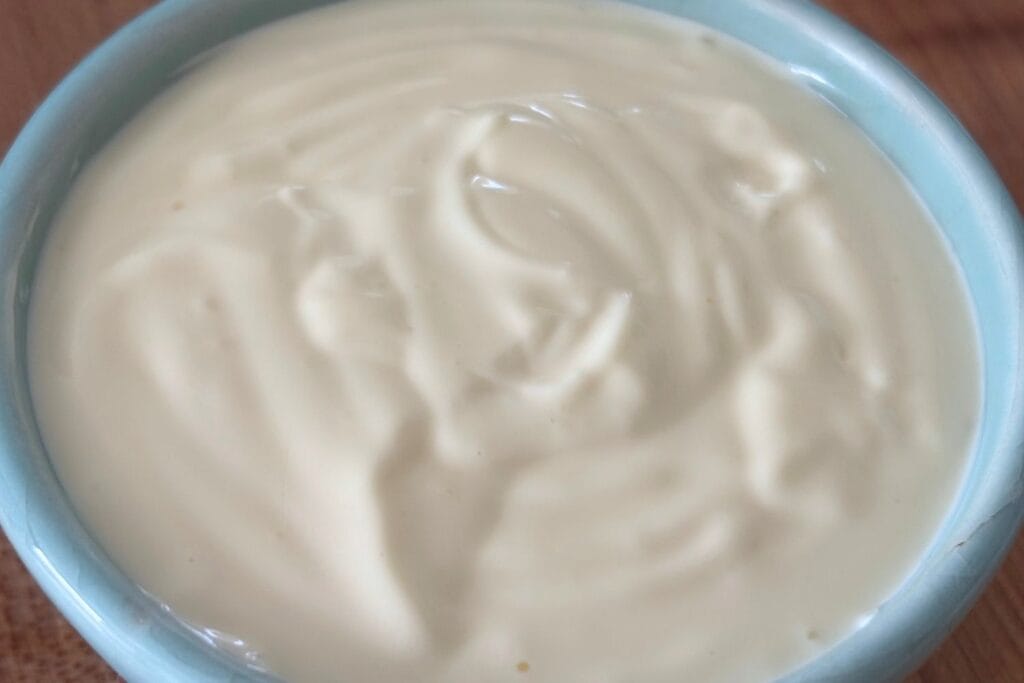
I used Marcella’s proportions exactly as written, which produced a thick, creamy mayonnaise with a subtle lemon flavor.
Choosing the Oil
Marcella Hazan recommends vegetable oil for a lighter, milder mayonnaise. Although she had made it with both olive oil and vegetable oil over the years, she ultimately came to prefer vegetable oil for most uses.
Extra-virgin olive oil can give mayonnaise a much stronger flavor. Marcella notes that some Tuscan olive oils can even make it taste bitter. For recipes where a more pronounced olive oil flavor is wanted, however, she suggests using a mild, lightly flavored olive oil.
For this recipe, I followed Marcella’s preference and used vegetable oil. It produced a mild mayonnaise that lets the lemon and egg yolks come through without a strong oil flavor.
How to Make Mayonnaise
Using an immersion blender makes homemade mayonnaise especially quick. With the ingredients at room temperature, the mayonnaise should begin to thicken almost immediately as you blend.
Step 01
Place the egg yolks, vegetable oil, lemon juice, and salt in a tall, narrow container.
Step 02
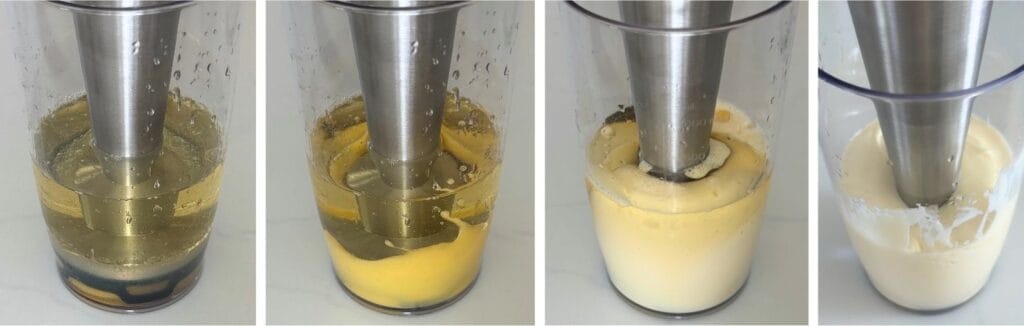
Place the immersion blender all the way at the bottom of the container.
Step 03
Turn the blender on and keep it at the bottom as the mayonnaise begins to thicken.
Step 04
Once the mixture at the bottom is thick and creamy, slowly move the blender upward.
Step 05
Continue blending, moving the blender gently up and down, until the mayonnaise is smooth and evenly thickened.
Step 06
Taste and adjust the salt or lemon juice as needed. Use immediately or refrigerate in a covered container.
Whole Egg vs. Egg Yolk
Mayonnaise can be made with either whole eggs or egg yolks, but Marcella Hazan’s recipe uses egg yolks only. Using just the yolks produces a richer, thicker mayonnaise than a version made with a whole egg.
Egg Yolk Mayonnaise
- Richer flavor
- Thick, creamy texture
- Deeper yellow color
- Marcella’s method
Whole Egg Mayonnaise
- Lighter texture
- Milder flavor
- Paler color
- Common in many immersion-blender recipes
Lemon Juice vs. Vinegar
Mayonnaise needs a little acidity to cut through the richness of the egg yolks and oil. Lemon juice or vinegar can be used, but Marcella Hazan recommends fresh lemon juice.
Lemon juice gives the mayonnaise a fresh, clean acidity that works especially well with the richness of the egg yolks and oil without tasting too citrusy or tart.
Lemon Juice
- Fresh, bright flavor
- Milder acidity
- Adds a subtle lemon flavor
- Marcella’s preference
Vinegar
- Sharper acidity
- Flavor varies depending on the vinegar used
- Common in many traditional mayonnaise recipes
- Can be substituted for lemon juice
Common Questions About Homemade Mayonnaise
Once you’ve made it yourself, you can use it anywhere you would normally use store-bought mayonnaise, from sandwiches and salads to dressings and sauces.
I used this batch in Marcella Hazan’s Tuna-Stuffed Tomatoes, where the creamy mayonnaise works especially well with the tuna, capers, and fresh tomatoes.
About Stephanie
I’m cooking through classic cookbooks one recipe at a time, sharing what works, what surprises me, and what I learn along the way. Every recipe is cooked and tested in my home kitchen, with a wine pairing to enjoy alongside it.